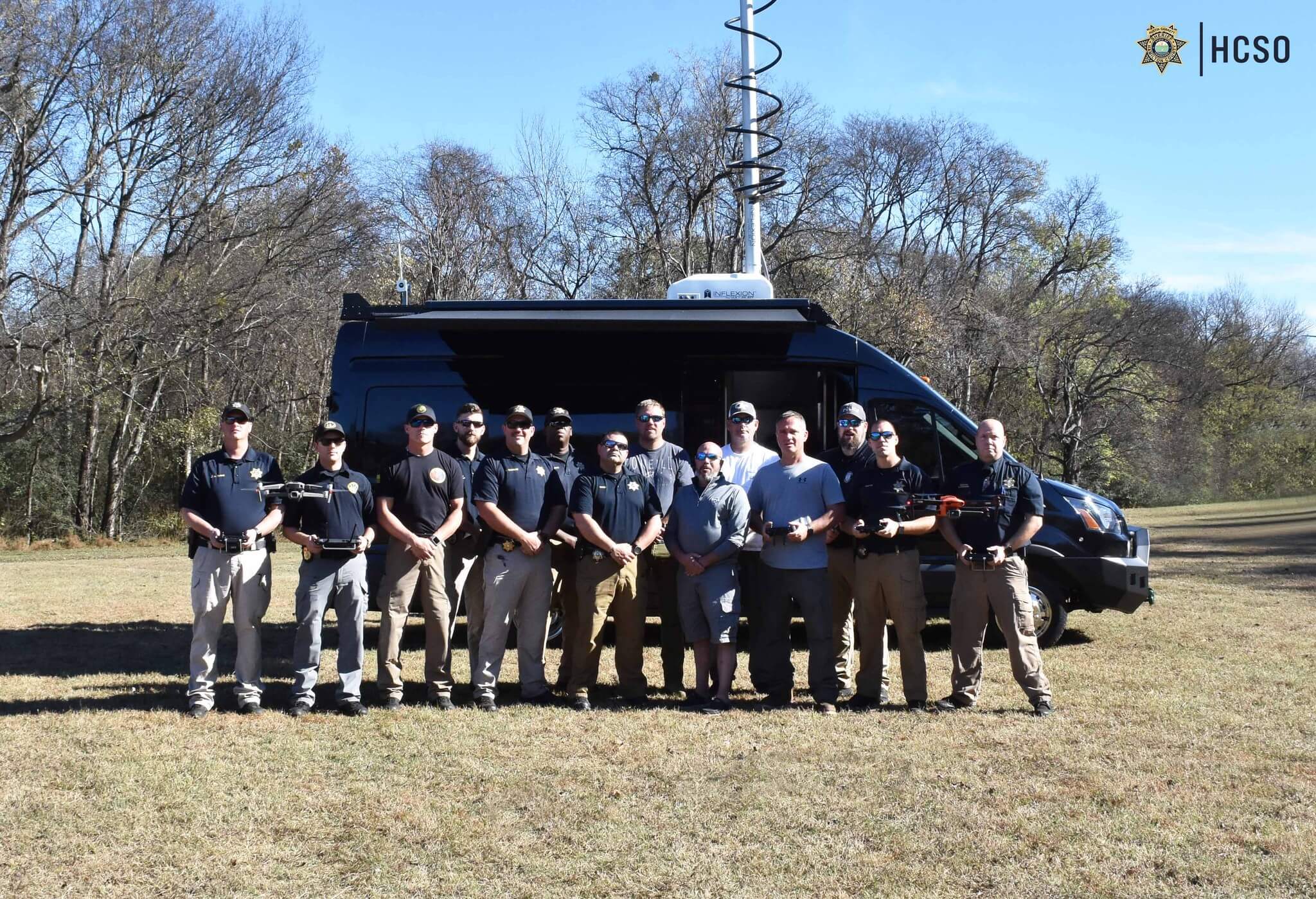
Until recent years, major law enforcement operations were often tied to headquarters or an emergency command post. Teams in the field reported back to those brick-and-mortar structures and waited for central command to issue directives. Waiting even half a minute could destroy any on-scene advantage.
Mass casualty events have become frighteningly common in the past decade or two. Setting up an incident command post quickly ensures clear communication and immediate task assignments. It can make the difference in preventing injuries or deaths.
Mobile command centers (MCCs) are changing things. Do you still need traditional police command posts like emergency operations centers (EOCs) or police headquarters (HQs)? Knowing the best use for each command post helps you equip your teams with the technology and setting they need for any public safety, natural disaster, weather, or other threat.
The Basics of MCCs and Traditional Police Command Posts
An MCC and a fixed EOC or HQ serve the same purpose. They provide a tactical hub for communications and decision-making during a weather event, natural disaster, large event, or critical incident.
In either setup, incident commanders direct field teams, analyze information, and ensure the event is managed from beginning to end. The main difference is that an MCC travels to the front lines. Fixed police command posts are in a building that can be miles away from the scene.
Comparing MCCs and Fixed EOCs/HQs
When a public safety agency compares the pros and cons of MCCs vs. traditional police command posts, it looks at five core areas.
Interoperability
- MCC: On-the-scene workstations with key technology like Cradlepoint 4G/5G gateway routers, signal boosters, and integrated communication systems allow police to communicate clearly and quickly with other agencies.
- Fixed EOC/HQ: Dedicated workstations for multiple agencies and fiber optics make for seamless communications with local, state, and federal agencies. Without secondary relays, bridging communications between field units can be harder.
Logistical Footprint
- MCC: Usually has a smaller footprint. A single Sprinter or Transit van may only have two workspaces, while a larger trailer could fit several more. Draxxon’s customized options ensure you have the space you need for the situations you handle.
- Fixed EOC/HQ: Often an oversized room with lots of space for multiple desks and work areas, making it possible for dozens of people to work together. Breakrooms and supplies for extended operations are always there.
Situational Awareness
- MCC: Go straight to the front lines for zero delays and a clear line of sight. Drone feeds let pilots direct you to the areas you need to see most, and PTZ optical and thermal cameras provide clear video in smoke or fog.
- Fixed EOC/HQ: Live feed depends on the proximity of security cameras and regional traffic cams. On-the-scene footage from field teams may take longer to reach you, affecting the timing of critical decisions.
Technology
- MCC: Modern MCCs are packed with technology. Pneumatic masts, satellite terminals, climate-controlled server racks, local mesh Wi-Fi, video walls, and power banks for drones are included. Outdoor video monitors also make it easy to update field teams.
- Fixed EOC/HQ: Similarly, traditional command posts have that technology. The biggest drawback is that field teams must take drone footage and send it to headquarters to view. It can create unwanted delays.
Time to Deploy/Respond
- MCC: Deployment time depends on how fast the driver reaches the scene. Emergency lights and sirens help with response times. Set up is often less than 15 minutes.
- Fixed EOC/HQ: It’s often already set up and ready to use. If you have to set up in a school gym or local auditorium, unpacking and setting up equipment takes a lot of time. Plus, personnel may need time to reach the command post, and equipment may need time to boot up.
How Do You Decide Between MCCs and Traditional Police Command Posts?
Your district needs its first or an improved command post, but you’re not sure which is best for your needs. Do you get a mobile unit or stick to the traditional post that you’re familiar with?
Budget Constraints
Start by reviewing your budget. A new command post requires an investment no matter what you choose. With an MCC, you choose between a van or truck and trailer. In the future, however, a trailer eliminates the need to purchase an entirely new mobile command vehicle.
A stationary command post often fits into an unused room in your headquarters or precinct, but you still need to consider the cost of the required technology. With field units operating miles away from headquarters, you cannot allow technology to fail you.
Infrastructure
During a natural disaster or severe weather event, cell towers may topple, power lines may go down, and fiber optics may be damaged. Until crews can make repairs, you can’t use power, internet, or cellular networks.
Both fixed command posts and MCCs need these services and rely on satellite connections and generators. MCCs can bring power directly to the scene.
Incident Type
What types of incidents do you experience? If you’re in the mountains, an MCC is essential for situations like lost hikers and wildfires. MCCs are also helpful in areas where hazardous material spills or barricaded suspect operations are a risk. You might also find a mobile post ideal for tornadoes, hurricanes, and blizzards.
When you consider the technology and mobility of an MCC, it’s best for:
- Active shooters/Barricaded subjects
- Hostage negotiations
- Natural disasters
- Public events like marathons, parades, or political rallies
- Severe weather
Traditional police command posts are better for future events you can plan for, or for local events close to the command post. For example, a college graduation where the guest speaker is a major celebrity and security details are heightened.
Scope
In a city like Seattle, you have a wide territory with communities onshore and on islands. Multiple departments come together to support each other with large-scale events. Mobile command posts make this much easier to manage.
In a smaller, rural location with a smaller population, you might not need to cover as much territory, or you might cover entire counties. A traditional command post is within a couple of miles of the area your officers serve, but MCCs are best if you have hundreds of square miles.
MCCs Bring Technology and Power to the Field
Draxxon’s MCVs and towable trailers bring the technology and power you need right to the front lines. This makes them an ideal option for any police department looking for a command center that goes where the team goes.
Schedule a demo and discuss your goals with our experts. Customizing MCCs to empower your force is our passion.