So many situations can knock out cellular networks. Cyber-attacks, blizzards, wildfires, mudslides, floods, earthquakes… When something affects critical infrastructure, cell towers and commercial cellular networks are often among the first to go. A cell network may be down for days or weeks. It’s more than an annoyance; it increases danger during a crisis.
Physical damage to fiber-optic cables, local power failures, and structural destruction of relay towers often cause immediate regional blackouts. Even if a tower survives the environmental damage or hack, any remaining service will be flooded with citizens trying to call loved ones.
This leaves local, state, and federal agencies at a serious disadvantage. Important communications between emergency managers and ground crews are cut off. Mobile command centers are essential in these situations.
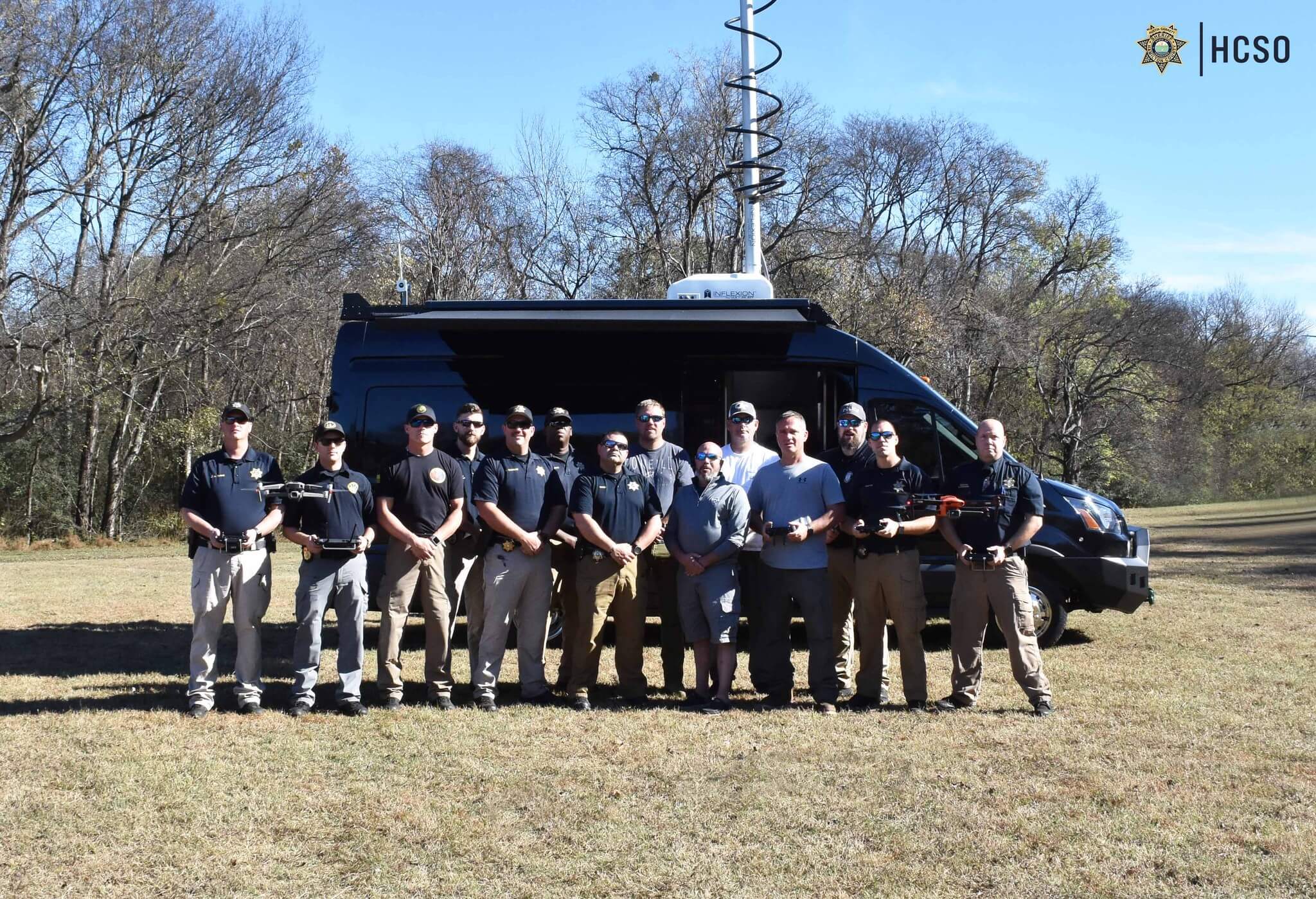
Mobile command centers restore emergency communications and ensure leaders can make decisions when major networks are offline. These specialized units serve as self-contained operational hubs, maintaining constant communication between teams on the ground and regional dispatchers.
Critical Incidents Rely on High-Speed Data
Emergency management, public safety, and security operations rely on high-speed data, geospatial mapping, and reliable radio connections. Today’s disaster management operations require constant data from thermal drone feeds, casualty databases, and mapping grids for search-and-rescue teams.
However, the infrastructure in many areas is limited in its design. It’s designed for daily use. It’s not storm- or hacker-proof. Cellular networks often fail in major incidents for three reasons.
Congested Networks
Spikes in user traffic can render an intact tower useless to first responders as they fight to get through thousands of other users. Commercial LTE and 5G bandwidths quickly become saturated beyond operational capacity as thousands of affected residents attempt to access mobile data at the same moment.
Equipment Destruction
Storms and earthquakes destroy buried cables, cell towers, and microwave links. Earthquakes snap underground fiber links, while severe windstorms and wildfires dismantle physical towers. This completely severs networks.
Offline Power Grids
Cellular sites might have standby batteries, but they’re usually limited to about 8 hours. Long electrical outages make towers useless until power is restored. Once backup battery reserves deplete during prolonged blackouts, surviving cell sites shut down, too.
When a cellular network is knocked out, you lose the structure that’s necessary for command operations. Ground teams cannot communicate with operational leaders. Agency heads lose situational awareness. Multi-agency coordination stumbles.
To regain control, you need an independent communication and operations hub at the scene. Tactical units must have an off-grid processing center that operates entirely independent of local utilities and commercial service providers.
A Mobile Command Center Becomes Your Autonomous Center
Mobile command centers offer more than radios within a vehicle. It’s a self-sustaining mobile command, control, and intelligence hub.
Failed infrastructure isn’t limiting when you have an MCC with its own computing infrastructure, network backhaul, and power source that you bring right to the ground crew. These platforms function as mobile dispatch centers, tactical briefing rooms, and centralized data processing units deployed directly to the hot zone.
Cross-Agency Radio Interoperability
Police, fire, EMTs, and National Guard teams often operate on different radio frequencies. An MCC integrates radio interoperability gateways that patch different radio frequencies together so teams can talk to each other.
By converting disparate VHF, UHF, P25, and digital radio signals, commanders eliminate dangerous communication gaps between responding units.
Localized Communication
When public cellular networks fail, area residents all flood any remaining towers to get messages through. This can lock out emergency personnel.
An MCC becomes a localized cellular and Wi-Fi hotspot for all responders. They don’t have to fight to get through crowded transmissions. The MMC’s system also provides secure communications, which keeps confidential information like photos of the damage or personnel names and locations from the general public and media.
High-grade encryption protocols ensure that mission-critical data remains protected from unauthorized interception and causes additional public panic.
Network Backhauls
Mobile command vehicles provide multi-WAN routine and satellite communications that provide high-bandwidth, low-latency internet connections. Field commanders can still access cloud-based GIS, stream live video to state and federal management agencies, and access critical databases.
Using redundant satellite links like Starlink or GEO systems, combined with bonded cellular routers, ensure uninterrupted cloud access even in remote or devastated locations.
Tips for Agencies Planning for Network Blackouts
If there’s a severe network outage, incorporate DRAXXON’s best tips for handling these blackouts. Strategic preparation must include evaluating hardware, refining operational protocols, and holding regular tactical drills.
Hold Regular Deployment Drills
Before an incident, run deployment drills in a zero-cellular environment to minimize setup time during a real emergency. Simulating complete blackouts reveals operational bottlenecks, hardware gaps, and setup delays before a real catastrophe strikes. It also familiarizes your team with the technology.
Keep Powered for Days
Use vehicles with dual power sources, such as auxiliary generators with battery/inverter banks, to ensure you have power during a multi-day grid failure. Robust power redundancy keeps onboard workstations, radios, climate control, and exterior lighting running for days on end.
Make Sure Everyone Is Heard With Interagency Standardization
Ensure all agencies are heard through universal radio bridging interfaces and open-architecture software. Establishing unified protocols beforehand guarantees seamless data sharing between municipal, state, and federal teams.
Stay Connected With Multi-Path Backhauls
End connectivity failures by combining satellite broadband, high-gain cellular boosters, and point-to-point microwave links. Intelligent multi-WAN routers automatically switch between available signals, always prioritizing stable, high-speed routes without any manual intervention required from your ground crew.
Use Integrated Aerial Assets to Assess Damage and Danger Zones
Assess all damaged infrastructure as quickly as possible using dedicated UAS launch and landing stations and live-streaming directly to monitors in the mobile command center. Unmanned Aerial Systems (UAS) offer immediate situational awareness, pinpointing structural damage and hazards without risking responder safety.
Maintaining Operational Command When Infrastructure Fails
Whether a major ice storm topples trees, poles, and cell towers or a hurricane makes landfall and knocks out everything, a coordinated response can’t wait. Your organization cannot rely on fixed infrastructure.
Traditional brick-and-mortar command facilities are vulnerable to widespread regional power outages and network blackouts, making mobile autonomy a necessity rather than a nice feature.
Draxxon specializes in customized mobile command vehicles and towable trailers that provide an autonomous platform with satellite backhaul, cross-frequency radio capabilities, and drone operations. We make sure that when a local network goes out, you maintain situational awareness and complete control.
We build every vehicle and trailer from the ground up to meet the demanding requirements of mission-critical emergency operations. Talk to us about our MCVs, trailers, and portable briefcase options. We work with you to ensure the platform you choose matches your agency’s needs.