Every month, there are dozens of wildfires, and only a small percentage are easily contained. So far in 2026, over 34,400 wildfires have burned approximately 2.8 million acres. It’s proving to be a record-breaking year for wildfires, and that’s alarming.
As wildfire seasons get longer and harder to control, fire departments across the nation struggle with balancing the importance of a fast response in environments where infrastructure is damaged beyond repair or didn’t exist in the first place.
When a wildfire is burning deep in the wilderness or moving fast towards urban areas, stationary command centers are ineffective. This is why today’s fire departments are increasingly relying on mobile command centers. Draxxon works with public safety agencies to ensure they have the innovation and technology needed for a tactical deployment.
The Challenges of Wildfire Command and Control
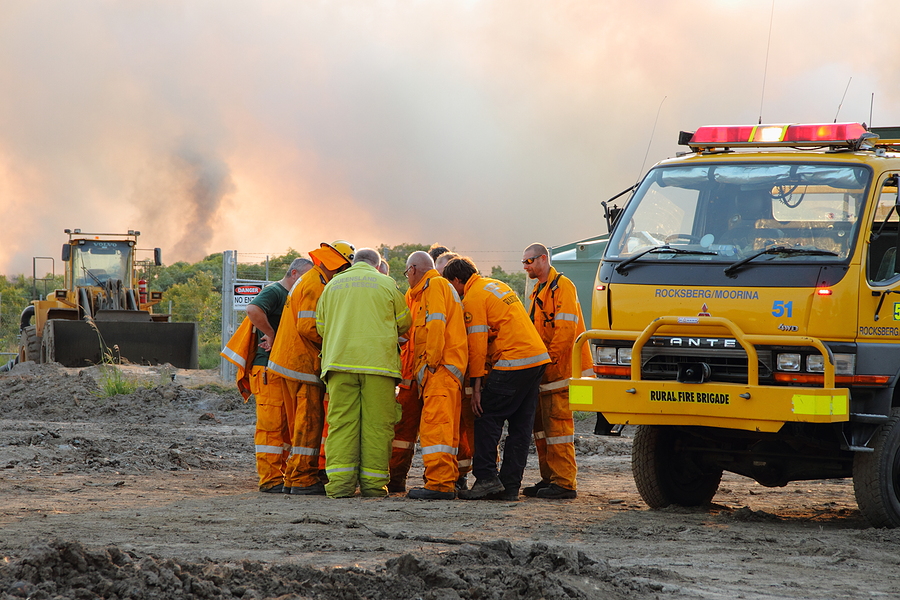
Command staff has so much to do when it comes to managing a wildfire. From the hotshots on the ground and flight crews handling aerial water drops to smokejumpers and handcrews, the data needs to be analyzed quickly to give split-second commands to each team in dangerous, ever-changing conditions.
While speed is essential, four obstacles prove challenging during a wildfire. These can make it impossible to do your job effectively.
- Communication Blackouts: Wildfires quickly destroy cellphone towers, fiber optic lines, and power lines. Plus, the terrain can impact the quality of radio signals and transmissions.
- Extreme Terrain: Wildfires don’t help you out by staying within accessible areas. The command center often has to navigate logging trails, overgrown mountain paths, and deep chasms.
- Rapidly Changing Conditions: As a wildfire intensifies, winds can shift, altering the fire’s trajectory. Waiting for a radio call from the ground crew or a weather report from local meteorologists is impractical. Real-time weather conditions and terrain maps are essential for planning strategic movements to ensure teams aren’t trapped.
- Visibility in Heavy Smoke: Visibility diminishes in heavy smoke. Ground crews may not have much information to give because they can only see a short distance. It makes it hard to gather the necessary information.
Technology offers ways to overcome those limitations. With custom-engineered mobile command centers, fire departments can establish a local command unit with real-time data and lag-free communications at the edge of a hot zone.
Draxxon’s Mobile Command Fleet
As a wildfire builds, the teams you need and the demands on them change. Being ready from initial staging through the end, when the fire is smoldering at a manageable level, is important. No two fires are identical, so the command capabilities need to match the situation.
That’s where Draxxon’s mobile command options make a difference. They’re designed to be exactly what you need, and components are easily swapped out if something needs to be upgraded or added. We work with you to ensure you have the technology and tools that matter most.
Mobile Command Vehicles
Our mobile command vehicles (DX-1000_ are built onto durable chassis like the Ford Transit or Mercedes Sprinter. Off-road suspension allows you to go where needed. They don’t require a CDL, making it easy for any licensed driver to get behind the wheel.
Mobile Command Trailers & Towables
If you’d rather tow a mobile command trailer, we offer the DX-816, an 8.5 x 16-foot towable. They have interior workstations with climate control and dry-erase board counters and walls.
Portable Ground Control Stations (PGCS)
When the terrain is completely impassable, our PGCS provides a small-footprint, localized control station that you carry with you for lightning-fast deployment. The technology sits within a rugged, waterproof Pelican case.
Customized Solutions
If you have your own design, no problem. Our Special Projects Division (SPD) works with you to design and manufacture the mobile command center you visualize. It doesn’t matter the scale of the project; we make it happen.
The Technology Behind a Wildfire Response
Within those mobile command centers comes a suite of technology that makes a difference in how the battle is fought. A modern command center can capture a wealth of data, analyze and structure it, and broadcast it to the teams who urgently need it.
Several areas of technology provide quality data that makes this possible.
Multi-Agency Communications
Wildfire containment brings several agencies together. You might have several volunteer fire departments, National Guard units, state forestry teams, and federal smokejumpers. Communications used to be a hurdle because each team operated on different radio bands and channels.
Advanced mobile command centers use high-tier communication suites with multi-band interoperability hardware and mobile networking, such as Cradlepoint 4G/5G routers. You also have satellite uplinks that automatically deploy when needed.
This technology brings everyone together on a unified network. There’s no lag, static, or lost feed. Messages make it to the teams in real-time, even if you have a mobile command unit miles from the front lines.
Outdoor Viewing Stations for Group Updates
The people stationed in a mobile command unit’s work area have a clear view of the different monitors and screens. That provides the convenience of quickly gathering data, but sometimes that data needs to be shared with a full team.
It’s wasteful to bring in a couple of team members to view the footage and then bring in another two members. You can’t fit the full team within the van. That’s where high-brightness, daylight-viewable outdoor monitors make a huge difference. Update the entire team at once.
Everyone sees the same real-time drone streams and topography maps at the same time.
Gathering data is only half the battle; it must be visualized and interpreted to be useful. Modern command center platforms feature an array of internal and external displays designed to align all stakeholders on a unified operating picture.
Power Resilience
Think about the vehicles going into a fire zone. They often run on gas, which means fuel is constantly being consumed. The longer an engine idles, the more fuel that’s consumed. If you’re hundreds of miles from a gas station, it impacts the mission.
Even if there are electrical hook-ups, the chances of the power staying on are low. As the fire decimates the terrain, power lines are often toppled as poles burn and fall.
Today’s mobile command centers don’t have to rely on gasoline or diesel. Many run on electricity powered by generators, and the on-board generators have high-capacity inverters and batteries. Turn the engine off, but the AC, computers, monitors, and flight stations remain active.
Add solar panels to your mobile command center’s rooftop, and solar can power everything you need for the entire mission. Not only is it quieter, but it also has no emissions. Stay inside, away from the smoke and ashes, and don’t worry about power loss or excessive heat damaging your valuable computer equipment.
Unmanned Aerial Systems (UAS) Integration
Since unmanned aerial systems (UAS) have grown in popularity, they’ve become an essential tool for providing video footage of hard-to-reach areas. They offer real-time footage of wildfire movement that humans simply cannot match.
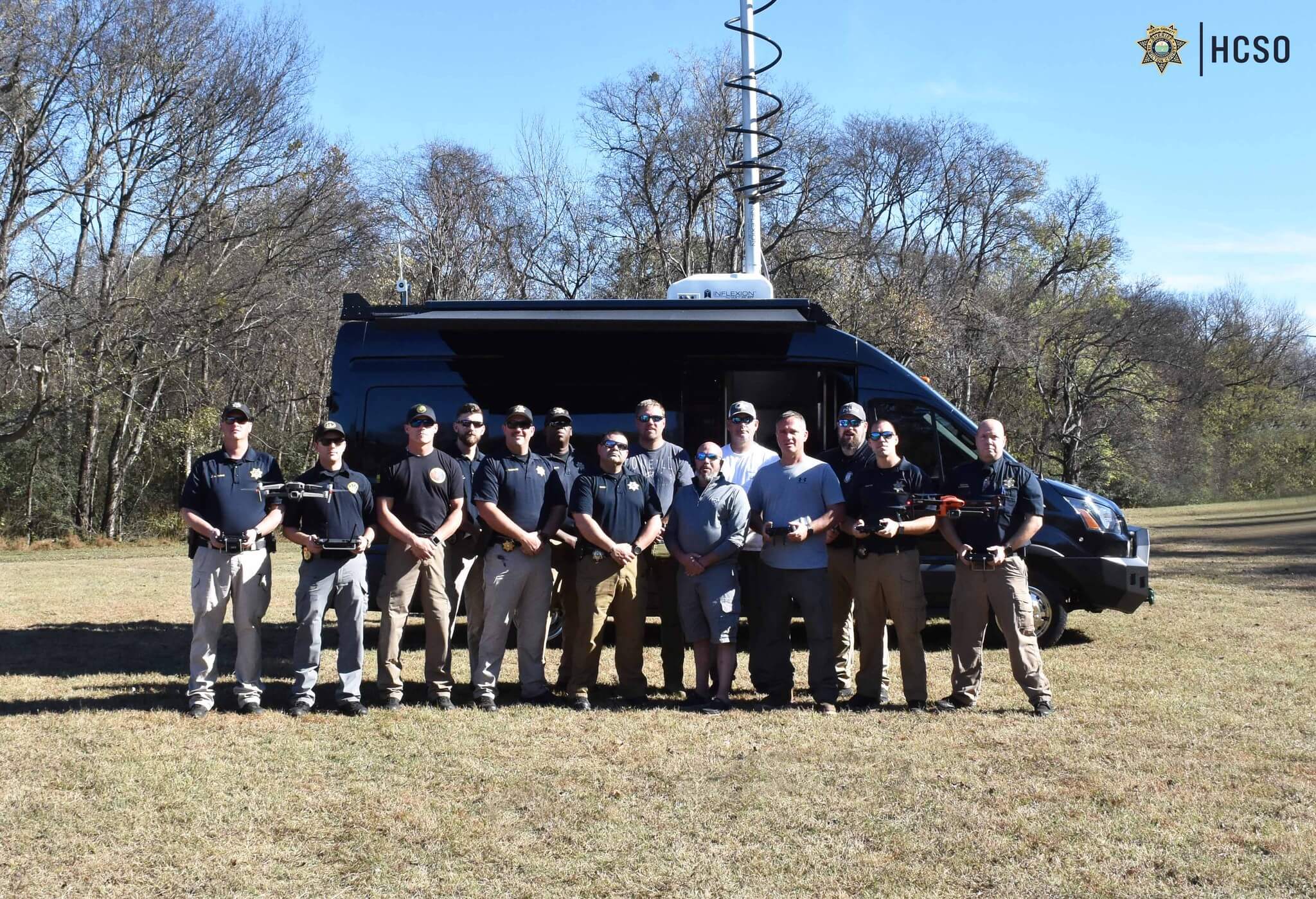
From the safety of an interior station or rooftop piloting station, drones are safely operated by up to four operators at once. Day and night, they return Beyond Visual Line of Sight (BVLOS) footage that alerts fire crews to increasing intensity, trajectory changes, and obstacles.
Drones equipped with advanced thermal imaging sensors can see the ground even in heavy smoke, and help map the fire’s perimeter, find hot spots, and locate breaches in fire lines. This provides insight to guide the team’s plan of attack and keep everyone safe.
What Sets Draxxon Apart
Across the nation, fire departments deal with a particular set of constraints that make their needs unique. Arid conditions in Arizona or New Mexico differ from the humid conditions in a state like Florida or Louisiana. The mountains of Washington present challenges that a flatter terrain like Kansas doesn’t.
As your crews face specific challenges and environmental hazards, it’s important to have a highly customized mobile command unit that supports successful missions. Draxxon’s customizations provide a tactical unit packed with technology that matters most.
We don’t just manufacture the mobile command unit and leave you to it. We’re here to show you exactly how everything works, so you’re ready for the next wildfire you face. Reach out to us online to request a demonstration.