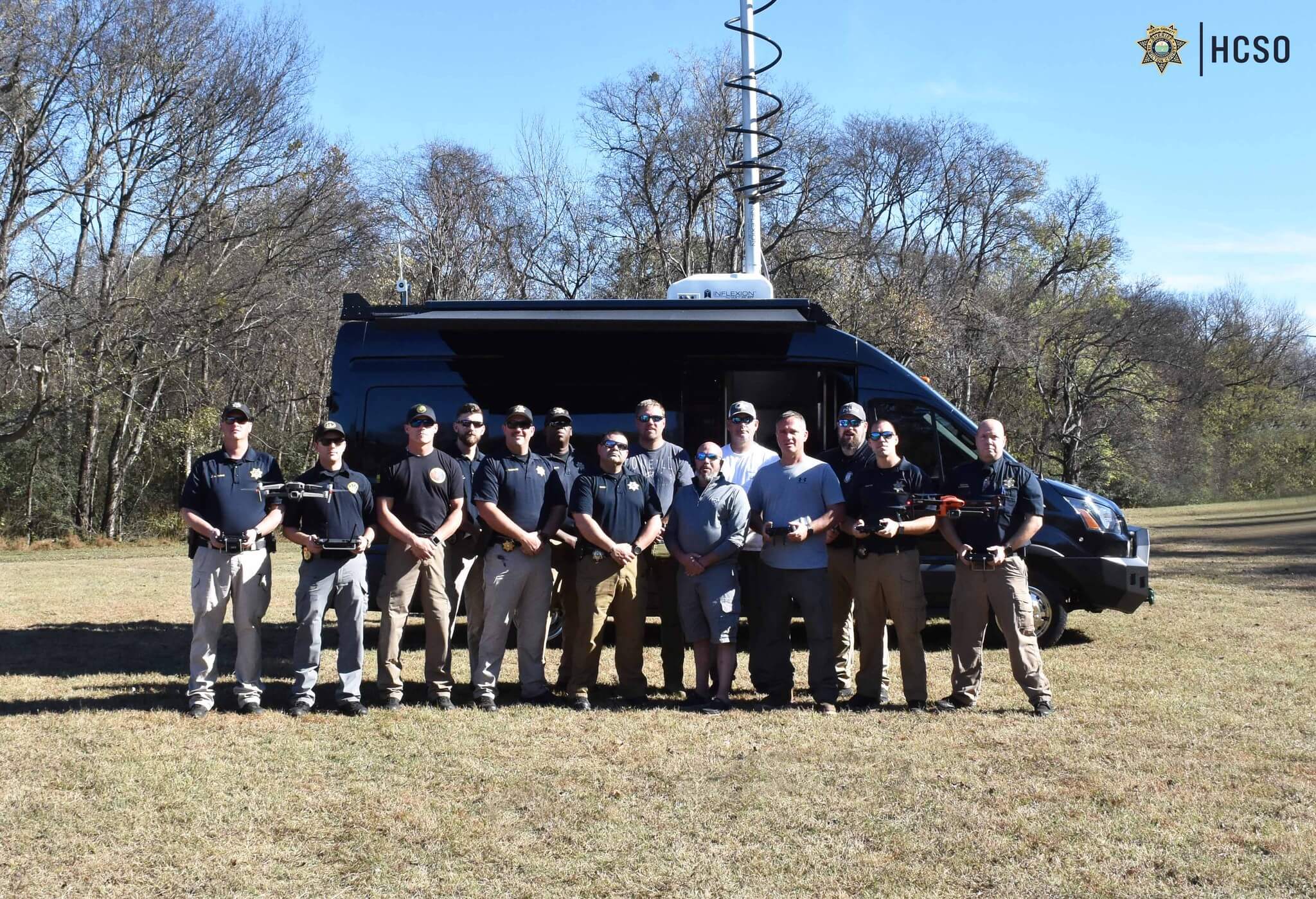
In the high-stakes world of Unmanned Aircraft Systems (UAS), success relies on speed, connectivity, and minimal latency—ideally none. For years, tactical teams struggled with “tailgate operations,” in which UAS pilots operated from the backs of trucks amid challenging weather, sun glare, and small screens that limited visibility. Battery failures often struck at the worst possible times.
Today, this has changed. Draxxon is transforming tactical missions with complex Beyond Visual Line of Sight (BVLOS) flights and advanced mobile command centers (MCC), enabling operations once considered impossible. Modern UAS coordination depends on a centralized, climate-controlled hub to acquire, process, and share real-time intelligence.
Whether managing search and rescue with a Draxxon DX-1000 or maintaining persistent situational awareness via a DX-816 trailer, the MCC serves as the mission’s core. Draxxon’s technology elevates drones from mere cameras to vital members of a global intelligence network.
For leaders, success now depends not only on the aircraft but also on the ground command. Mobile command centers make essential strategies easier to coordinate and pull off.
Why Draxxon’s Engineering Gives You an Edge
Before we delve into the eight strategies for UAS operations, it helps to understand the technology Draxxon provides to support successful missions. We do everything possible to eliminate three of the largest hurdles UAS operations face – fatigue, heat, and signal interference.
1. The DX-816
When a mission won’t be completed in a day, an MCC trailer is often preferred because you can lock it up and leave it in place for the next day. Take the truck home, get some sleep, and return recharged for Day 2 of your UAS operations.
The other benefit is that the smaller footprint won’t require as much fuel or power to keep going. At 8.5 x 15 feet, it’s sizable and includes the technology you need, but you can opt for an all-electric model that never requires you to refill its tank. Plug it in and get to work.
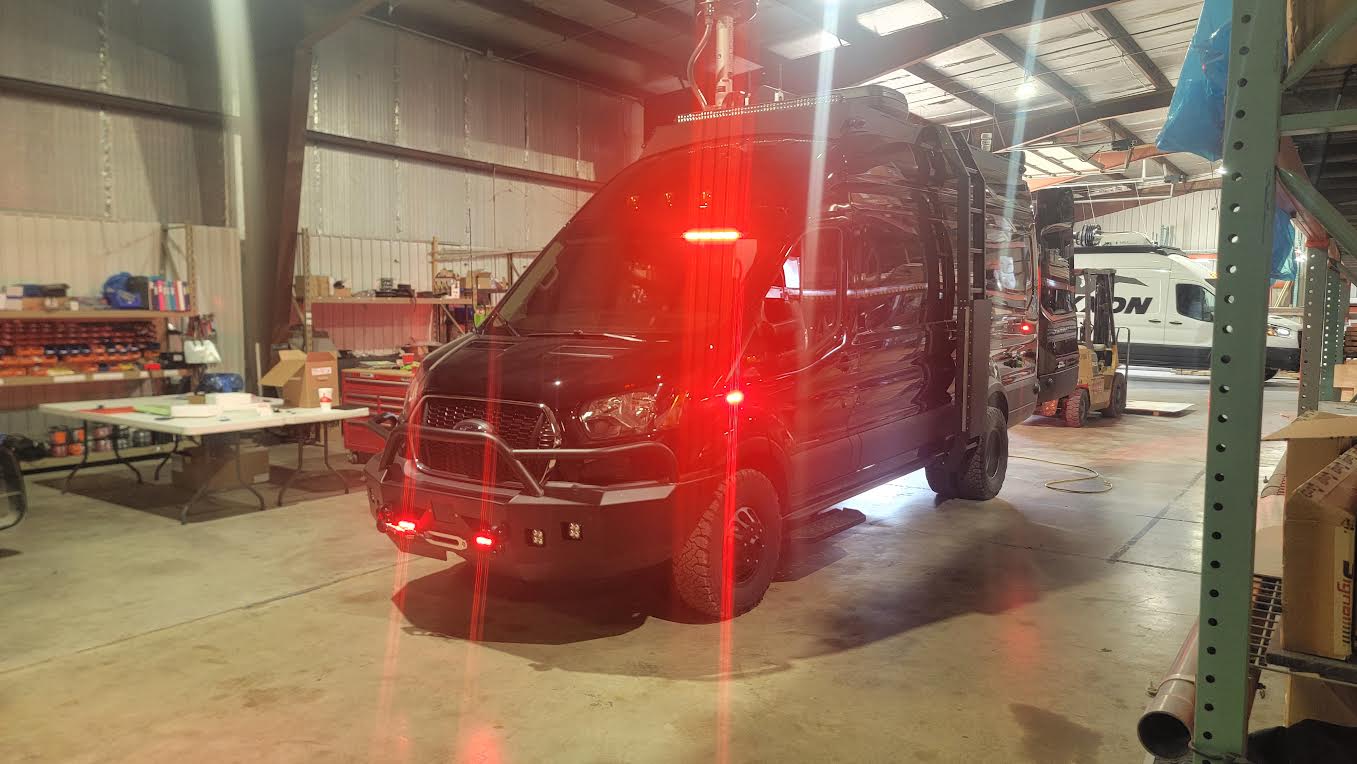
2. The DX-1000
Choose a Ford Transit or Mercedes Sprinter chassis for your tactical operations center. The off-road design allows you to go almost anywhere, even on challenging terrain.
A climate-controlled interior keeps computers and server racks from overheating, even if it’s hot outside. Plus, the UAS operator can focus on the flight rather than oppressive heat and humidity or chilling Arctic blasts.
3. Portable Ground Control Stations
Carry your control stations with you in a rugged Pelican case. Deploy in minutes with the one-button startup and pick up and move to a different location just as easily.
It offers both 12V rechargeable battery power and 12V cigarette lighter power. It’s also completely customizable.
Eight Strategies for Successful UAS Operations
No matter what MCC you select, these strategies are essential for a successful UAS operation.
Strategy #1 – Establish a “Command Operating Picture”
If the pilot sees things the ground command team doesn’t, there’s a problem. The ground commander may miss potential threats that could derail your mission.
When you’re getting real-time data from a 4K video feed, live thermal images, local weather radars, and airspace data, you have a full picture. Coordinate with the rest of the team so everyone is on the same page and aware of potential threats or issues before they stop your mission.
Draxxon’s MCC offers multiple video screens, maps, radar, intelligence reports, and live-broadcasting technology to ensure nothing is missed. Ground crew briefings occur easily, without everyone crowding into the van or trailer or getting in a UAS pilot’s way. All parties have the same information at the same time.
Strategy #2 – Ensure Real-Time Verbal Coordination
Seeing videos and the real-time feed is important, but so is verbal communication. When you have fire on one channel, police on a second, and UAS flight commanders on a third, it’s hard to hear messages from each other.
Integrating a Radio Interoperability System (RIOS) allows the operator to bring different devices and channels into a single talk group. The pilot provides verbal reports that everyone can hear, even if they’re on a different radio frequency.
Strategy #3 – Implement “Silent Watch Protocols”
Some missions require secrecy. You don’t want vibrations, thermal signatures, or noise from your MCC revealing your location. Instead of loading fuel-based generators, which tend to be extremely noisy, switch to battery-first power management.
Run your AC and workstations off lithium-ion batteries for whisper-quiet operations. Draxxon’s MCCs offer up to 12 hours of “Silent Watch” operations.
Strategy #4 – Increase Your Operational Radius
What good is a UAS operation that’s limited by how far it can go? If a drone is tethered to an MCC and area infrastructure, it’s never going to see the full picture, which limits your mission. In a storm or wildfire, towers may topple, creating dead zones. It’s not an issue with Draxxon’s technology.
Draxxon uses Cradlepoint 4G/5G LTE routers to create a wireless network that extends into the field. With top security, only those who need access to the real-time information can view it.
Strategy #5 – Prioritize “Edge” Data Processing
Your drone operator has the footage, and now you’re waiting for it to upload to the cloud. It’s taking much longer than expected or desired. Edge data processing is a game-changer. Using an onboard PC and powerful data processors, maps, UAS imagery, and UAS video footage are rendered instantly.
There’s no waiting to see a 3D map of the terrain or a video feed of where a wildfire is moving. You see the problem and can react in seconds, which is key to a successful operation.
Strategy #6 – Optimize Your Briefing Area
Draxxon incorporates outdoor viewing stations where teams meet in privacy or full sunlight. Tent shelters connect to outdoor displays if it’s raining or snowing, and no one wants to get soaked while viewing footage. Daylight-viewable monitors allow for outdoor briefings where the sun’s position doesn’t matter. Inside the MCC, everything remains quiet for the UAS pilot, who needs to be able to concentrate.
Strategy #7 – Use Multi-Platform Integration
UAS covers the sky and ground from a bird’s-eye vantage. Teams move across the land on foot. Draxxon’s UAS includes charging stations and feeds to integrate multiple platforms. You can add an Unmanned Ground Vehicle (UGV) to cover more area with close-quarter checks.
Strategy #8 – Set Up Quickly With Rapid Deployments
Finally, rapid deployments make or break your mission. Every second spent connecting cables, raising masts, or establishing communications is wasted.
Draxxon’s One Button Startup technology has telescoping masts that raise and communications autolink as soon as the vehicle is parked. Get set up in less than 10 minutes.
Stay Up to Date With Regulatory Requirements
Regulations are constantly evolving to keep pace with advancing technology. Any drone weighing more than 250 grams must comply with Remote ID broadcasting and identification requirements, and Unmanned Traffic Management (UTM) is necessary to support BVLOS operations.
In late 2025, the FCC adopted rules that limit the authorization of new drones made outside the U.S. That’s one of several new rules you need to pay attention to. Operations Supervisors are moving toward automated piloting. And the FAA is moving away from compliance actions toward legal enforcement for careless operations, safety violations, or UAS restrictions.
Because regulatory requirements continually change, you want to quickly upgrade your technology. Draxxon’s DX-Series was designed with future-proofing in mind. Instead of replacing entire vehicles, upgrade components as needed.
Draxxon’s MCC solutions include Mobile Command Vehicles (MCVs), Mobile Command Trailers and Towables (MCTs), and Portable Ground Control Stations. If that’s not enough, talk to us about a customized MCC.
Our Special Projects Division provides custom solutions to your needs. Talk to us about a purpose-built design that matches your exact needs. Let us know what you need, no matter how complex, and we’ll deliver a prototype for you to approve before it goes into production and is ready for deployment in record time.