There’s no telling when a disaster will hit. It could be a fast-moving wildfire, a sudden hurricane or tornado, or a national security event. When it does happen, one of the first victims is the area’s infrastructure. Cell towers topple, power fails, and routes to the disaster’s center may be blocked.
In all of the chaos and anxiety comes a need for resilience and reliability. It’s up to local, state, and federal agencies to build a mobile command center (MCC) deployment plan that’s ready to go before a disaster hits.
Choose the Right Asset
One of the biggest mistakes we see is when organizations assume that mobile command vehicles (MCVs) are one-size-fits-all. It’s rarely the case. A large van might be great for helping during a hurricane, but it struggles to navigate narrow mountain trails where lightning has started a fire.
You need to choose assets that match the mission’s scale. DRAXXON’s mobile command assets come in three tiers, making it easy to match the asset to the job at hand.
Tier I: Mobile Command Vehicles
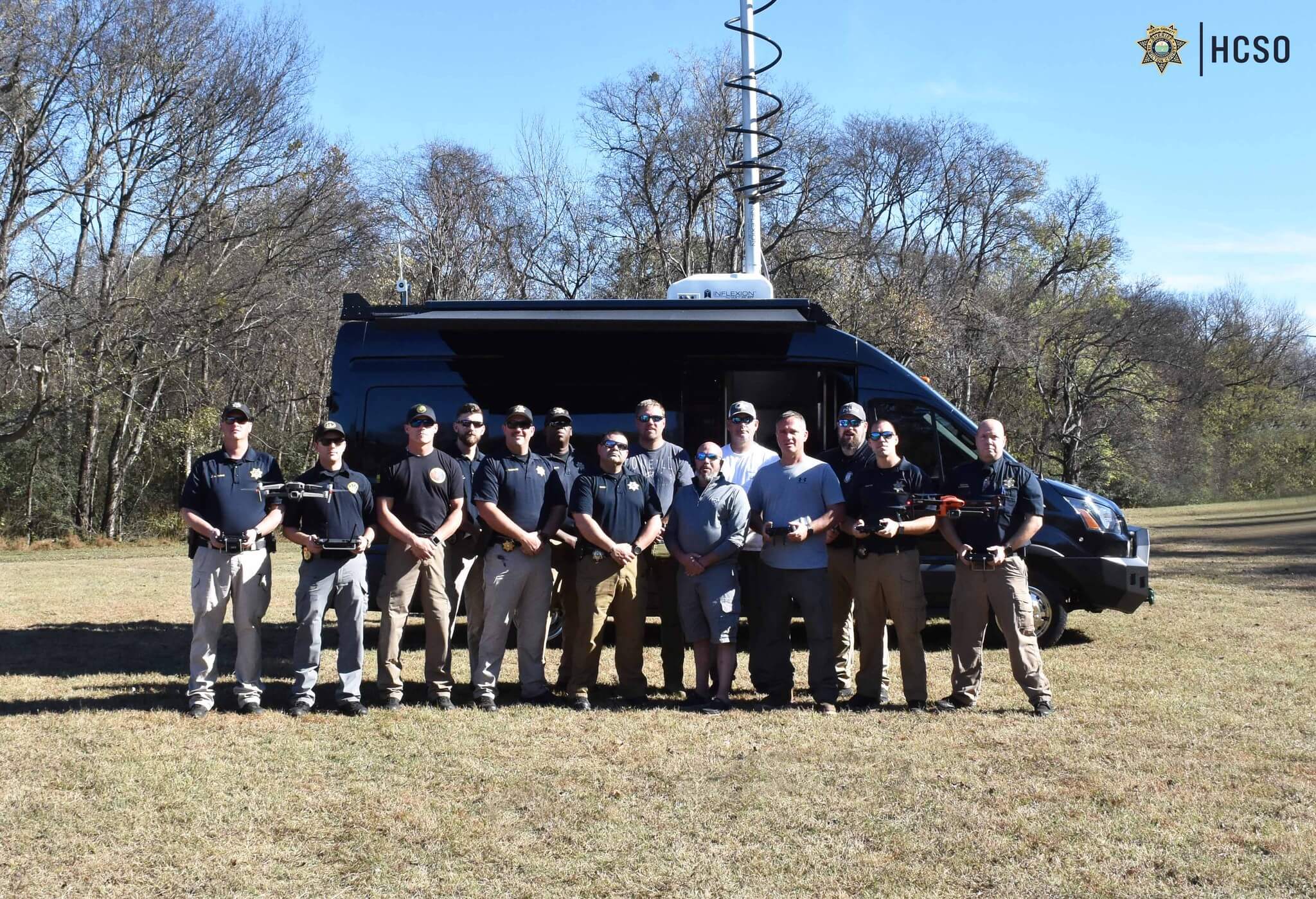
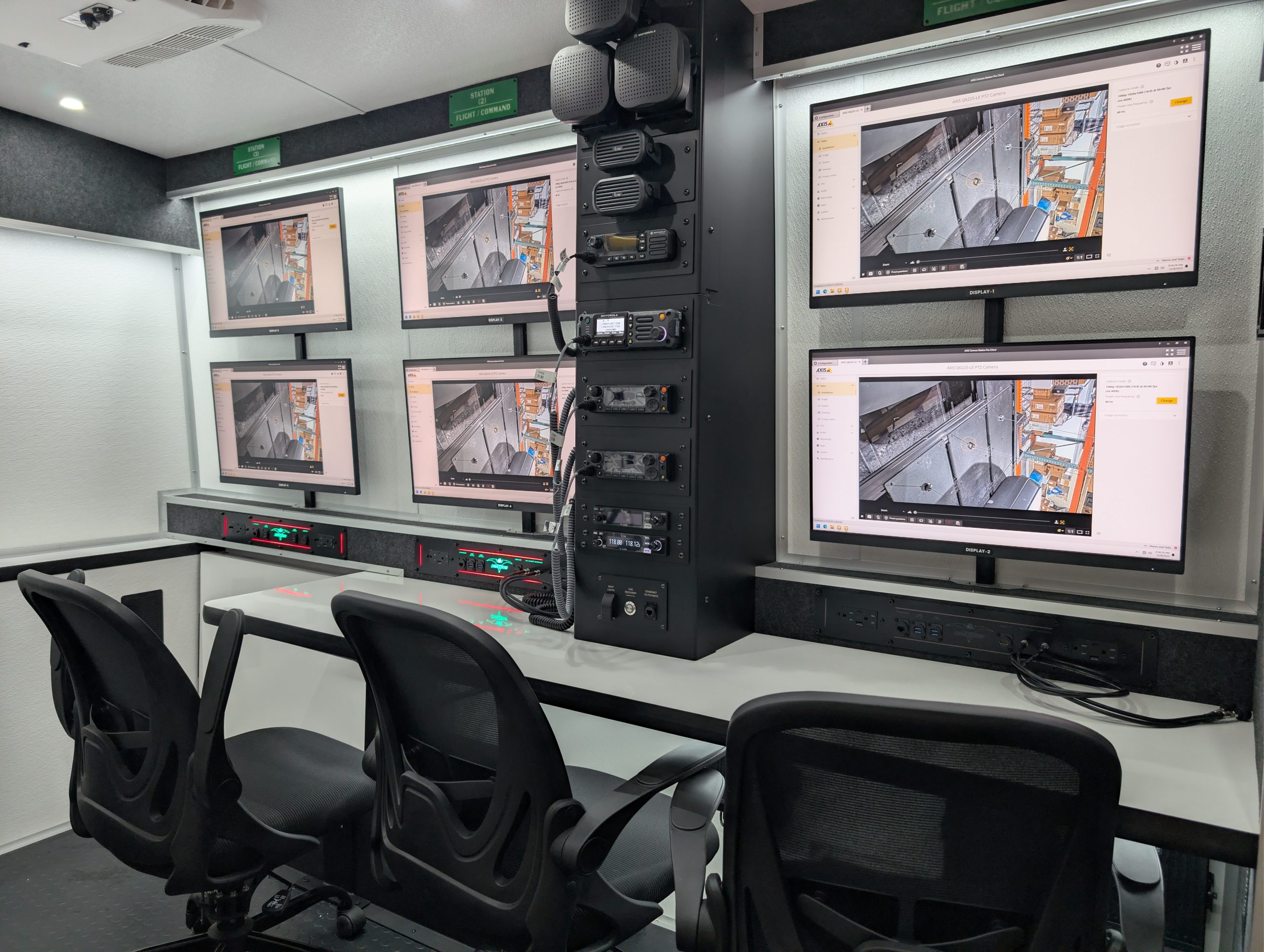
The DX-1000 is built on a ruggedized Ford Transit or Mercedes Sprinter chassis with off-road suspensions and marine-grade components. They’re designed for rough roads and packed with features such as multiple monitors, UAS stations, climate control, and ergonomic workstations for comfort during long shifts.
Tier II: Mobile Trailers & Towables
For longer disaster campaigns, towables help. You need a stationary MCC, but it must be equipped with essential technology that provides the infrastructure required to do the job.
DRAXXON DX-816 is an 8.5′ x 16′ extended height trailer, and additional lengths are possible. The mobile trailer is small enough to tow off-road in narrow places, making it handy when you have to go into the woods.
With generators, onboard servers, and fully electric options, you have the optimal workspace for UAS and ground control operations.
Tier III: Portable Ground Control Stations
Floods washed a bridge out. Mudslides made the roads impassible. You’re on foot for part of the mission, so you need something easy to carry to the scene.
Portable Ground Control Stations are built into ruggedized, waterproof Pelican cases. Bring them with you anywhere you need to be. They set up in minutes and have daylight-viewable monitors that make it easy to work out in the open without struggling to see the real-time footage.
Outline the Standard Operating Procedures
Now that you have the MCC you need for the mission, you need standard operating procedures to go with it. Your comprehensive pre-disaster plan must determine who is on the team, where it is headed, and how it’s structured.
Phase 1: Assemble Crews
The first phase is to have your crews outlined and then trigger the response. You need to know who is doing what in each state. If there’s a tornado, you’ll have the watch first to see where it touches down, and then once it has, the warning triggers the response.
You need to have someone already trained and ready to drive the MCV or towable. You need a communications specialist and the UAS pilot. Someone needs to be able to interpret any incoming data and images. Consider the mission and who the essential team members are for each step.
Phase 2: Getting to the Staging Site
The team is in place, so it’s time to get to the site. Navigation can be tricky, as there may be downed trees or washed-out roads. A wildfire may block specific routes for safety reasons. Low-hanging wires might be a problem for a tall trailer.
Drivers and teams on the MCV or in the truck must have reliable GPS tracking and video surveillance to alert them to issues ahead, and another route must be calculated as quickly as possible.
Phase 3: Select Your Site and Set the Scene
You already know the general destination, but once you arrive, you have to find the ideal location to set up. If you’re working in a state park, you’ll want a level spot for an MCV. When the mast is fully extended, you don’t want a slope putting you at risk of toppling the vehicle.
Once the site is selected, stabilization jacks are set up to secure the vehicle or trailer from shifting. Awnings and any tents go up. If you’ll be working at night, lighting is arranged to ensure people can see the area they’re working in or holding briefs.
Phase 4: Setting Up the Infrastructure
The trailer or van is stabilized, and the workspaces are set up. Masts and antennas are deployed, and systems are powered up. The infrastructure is next.
Start by booting up the internal infrastructure and raising masts. Choose the power source, whether you’re running on a generator or going for silent operations with an inverter/battery.
As systems load, choose the network and register your local device. This gets everyone online and makes it easy to share information.
You do need a reliable network for radio communications and real-time information sharing, so you need to prevent network failures. Multi-layered communication is needed in an off-grid network ecosystem. Look for:
- Cradlepoint 4G LTE/5G routers
- Exterior antennas and signal boosters
- Live stream and broadcasting capabilities
Become Self-Sustaining for Long Deployments
Not every disaster is resolved in a few days. Sometimes, mobile command centers are needed for weeks. If a fire is working its way through a forested area, the mobile command center will remain until it’s under control, which can take time.
Because missions can take weeks or months, they need to be self-sustaining. Consider combination generators from Cummins or Honda.
They have advanced inverter and battery power blocks that allow you to switch to silent battery operations instead of drawing on fuel. You could also look into fully electric power options using solar panels and large-capacity lithium battery storage.
UAS Systems Ensure Real-Time Situational Awareness
Disaster preparation and responses are no longer managed solely from the ground. Unmanned Aircraft Systems (UAS) are an essential part of operations because they can reach where your teams cannot access.
UAS are important for tracking wildfires, even through heavy smoke, and for using thermal and aerial imagery to detect surface changes or assess the structural integrity of a building following an earthquake.
An advanced MCC deployment plan details exactly how your ground teams and UAS will work together. The DX-1000 provides dedicated interior workstation areas, battery-charging arrays, and dry-erase walls and counters for mapping flight grids. This ensures there are no gaps in UAS operations and information sharing.
Sharing Real-Time Data
UAS are essential for providing real-time images in disaster zones. The live-feed videos and thermal images provide views into areas where team members would be in danger or unable to reach easily.
You need a mobile command center that can share these videos and images to daylight-viewable monitors for team members to see during briefings. You also need multiple videos so that the incident commander can watch both the high-res optical feed and thermal images and heat signatures simultaneously.
Mitigating Drone Downtime
During a prolonged disaster, UAS operations face hurdles such as drained batteries. If a pilot has to wait for a drone’s batteries to charge, it’s frustrating and impacts everyone waiting for essential real-time footage.
Your MCC deployment framework has to incorporate a continuous rotation schedule. While one UAS is in the sky, another is charging, or multiple battery packs are charging. Built-in inverter power systems and high-output battery banks make this possible. As soon as one UAS lands, another is fully charged and ready to launch.
Stay on Top of Maintenance, Training, and Practice Drills
Once you have your deployment plan set, you need to stay on top of practices, training, and maintenance. The last thing you want is to have an important mission and find your team or equipment isn’t ready.
Every week, check the vehicle’s tire pressure and fluid levels. Run the secondary generator for 30 minutes.
Once a month, raise the telescoping mast. Wipe down the tubes to remove any pollen, dirt, or grime. Test the cameras and run any necessary updates on the onboard routers and networks. Each year, lubricate the mast with a silicone-based lubricant by injecting it into the weep holes.
Throughout the year, make sure your personnel complete practice drills. It’s also helpful to have some members cross-train in other areas so that if someone is sick or injured, others are trained and ready to take over.
The Right MCC Ensures Success
A mobile command center is more than a tactical vehicle to use during disasters. DRAXXON’s vehicles, trailers, and portable command centers ensure success while protecting others, even when the infrastructure collapses.
With a solid action plan, the right equipment, and regular drills, your next mission will be a success. Reach out to DRAXXON to let us know what you could face in the future, and we’ll help you prepare for every possible hurdle.