On Friday the 13th, the FAA ordered all U.S. airports to ground domestic flights. For hours, passengers and crews waited, not knowing what was happening. While it seems to have been a software glitch, airports had Airport Emergency Plans (AEP) to follow. That AEP has several FAA-defined core functions.
- Airport Operations and Maintenance
- Alert Notification and Warning
- Command and Control
- Communications
- Emergency Public Information
- Firefighting and Rescue
- Health and Medical
- Law Enforcement and Security
- Protective Actions
- Resource Management
During a situation, emergency management teams have to prioritize the response to include some or all of those features. It takes a lot of coordination with multiple agencies. Mobile command centers offer tremendous benefits during an airport emergency.
The Challenges of Airport Emergency Management
When there’s an emergency, several challenges arise due to the need for a fast, comprehensive, flawless response. The main challenges include:
- Communication Gaps: Multiple agencies communicate on different frequencies, so sometimes lag keeps pertinent information from reaching incident command as quickly as is needed. Radio congestion also adds to the slow flow of information or overlooked data.
- Contradicting Goals: Multiple things happen at once during an emergency. Security may need people to evacuate as quickly as possible, but firefighters are working on a fire in the fastest evacuation route and need people to stay out of that area.
- Difficulty Holding Realistic Drills: Airports are busy 24/7, making it hard to hold drills for different types of events without passenger foot traffic and planes getting in the way or not realizing and panicking.
- Limited Staff and Resources: Smaller airports may not have the staff and resources available for some emergencies, especially if the airport tends to have a skeleton crew in the evenings and is on a very tight budget.
- Long-Duration and Responder Fatigue: When an airport event lasts days, command post staff and responders work longer hours than normal. It can lead to fatigue, and that increases the chances of an error in judgment that impacts efficiency.
- Multi-Agency Coordination: During an airport emergency, air marshals, firefighters, paramedics, police, airport security, and federal authorities have to work together. Communications need to be shared with all teams and personnel.
- Off-Site Incidents: Sometimes, airport emergencies don’t happen at the airport. A plane may make an emergency landing far from the airport, and the emergency response has to travel to areas that could be very remote.
How Your AEP Guides Crisis Response
An Airport Emergency Plan establishes the framework for handling every type of emergency, including:
- Aircraft accidents and incidents
- Bomb incidents
- Fires in fuel storage areas and airport structures
- Hazardous materials and dangerous goods incidents
- Hijackings and sabotage
- Natural disasters
- Power failures
- Water rescues
This plan is essential for keeping everyone on the same page when it comes to how all teams must respond by:
- Assigning specific actions to the different teams, ensuring that everyone has a role to fill and understands their responsibilities.
- Coordinating multiple agency responses and making the airport personnel an integral part of that response.
- Deploying redundant communication systems to ensure operations continue without lag or gaps in data.
- Establishing who is handling on-the-scene, operational, and overall command, so that teams know who to report to.
- Managing resources to make sure that there is a space for incident command to take place, personnel are in place, and supplies and equipment are ready for use.
The FAA Airport Emergency Plan requirements make it necessary for all airports to hold annual plan reviews. Class I airports must hold realistic drills every three years.
Roles Mobile Command Centers Fill During Airport Emergencies
With any emergency, the response has to be fast and accurate. Often, you have multiple people working together in different areas, so there’s no room for incomplete or incorrect information and actions. Mobile command centers help address any possible inconsistencies.
On-Scene Incident Command
Whether the emergency is in the airport terminal or a few miles away in the mountains, a fixed office that’s not close to the scene creates problems. People are scattered all over and can’t keep running back to the fixed office for command briefs. On-scene incident command provides a hub that’s close to the scene, and incident commanders can see first-hand what’s happening and adjust strategies in real-time.
Multi-Agency Interoperability
Airport emergencies require careful teamwork by everyone from local police and EMS to the FAA and firefighters. Each team often uses a different radio frequency or software. Bridging these gaps is essential for seamless communications.
Mobile command centers use built-in radio gateways and cross-band repeaters to ensure that all teams communicate with the command leaders and other teams. No information gets lost.
Real-Time Situational Awareness
Real-time images of the scene are essential for decision-making. Mobile command centers offer weather radars, drone launch pads and charging stations, and PTZ and thermal cameras to provide real-time video footage and images that are essential when making decisions. Quickly search for survivors using thermal cameras on drones that cover more area in minutes.
Workspace for Incident Command Staff
Draxxon’s mobile command vehicles and trailers include ergonomic workstations that help ease fatigue. They have dry-erase boards for note-taking and strategic planning. They also have outdoor viewable displays for command center updates and team meetings. They’re also climate-controlled.
Backup for Data and Dispatch
There’s always the risk of a power outage that lasts longer than expected. Damage to a physical building may knock server rooms offline for days or weeks.
A mobile command center is a self-sustainable emergency operations center that can be powered with solar panels and battery systems to keep generators running. Data like passenger manifests are still available, and command personnel continue analyzing data and providing additional instruction.
Draxxon’s Mobile Command Center Features
Draxxon specializes in three categories of mobile command centers. No matter which you select, they include live stream and broadcasting capabilities, daylight viewable displays, multiple USB charging ports, and provisions for UAS aircraft and equipment.
Mobile Command Vehicles
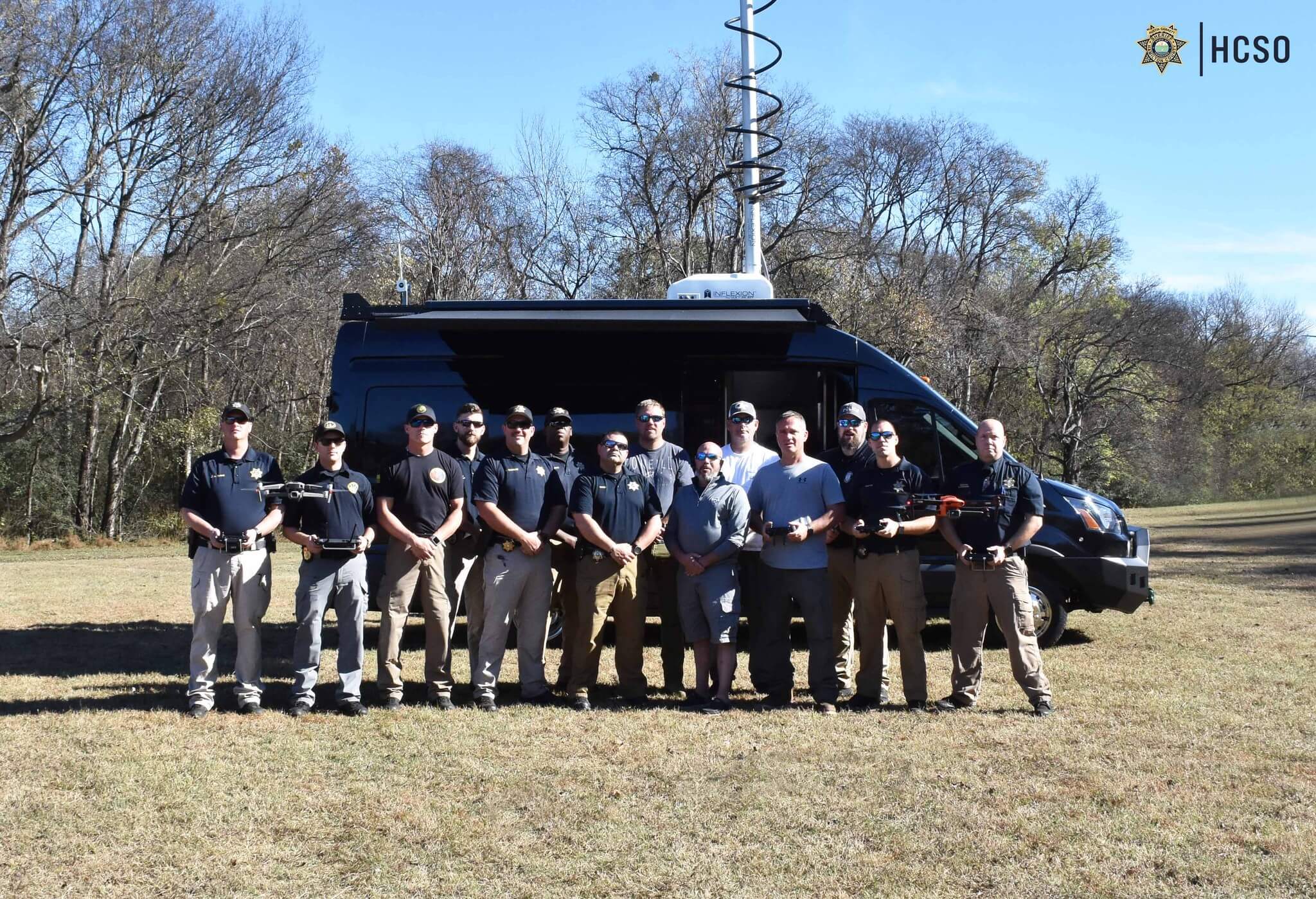
Ford Transit or Mercedes Sprinter platforms capable of off-road driving. Drive the van to the scene with emergency lights and sirens. Standout features include:
- Integrated communication systems
- Interior flight stations
- Inverter and battery power sources
- Multiple USB, HDMI, and Ethernet interfaces
- On-board imagery and data recording
- Powered awnings and privacy enclosures
Mobile Command Trailers and Towables
A mobile command trailer can be towed to the location, parked, and left there for weeks or months. Command center personnel can drive back to a hotel or their home when another command center lead takes the next shift. While it includes many of the features a mobile command vehicle has, it also offers:
- Exterior LED lighting
- Fully electric option
- Honda and Cummins generators
- Outdoor tactical viewing station with daylight monitors
Portable Ground Control Stations
A portable ground control station sits within a Pelican case and is quickly deployed. Carry it into areas inaccessible to trucks or vans. Features include:
- 12-volt cigarette accessory power
- Internal 12-volt rechargeable battery
- Marine-grade components
- On-board PC with data and image processing
- One-button startup
Draxxon also offers customized solutions. Let us know more about your organization, the work you do, and the features you wish you had to help every emergency response go smoothly. Request a demonstration or get in touch to learn more.