Every year across the U.S., there are planned festivals and public events, law enforcement and SWAT deployments, and natural disasters like floods, hurricanes, and wildfires. The past few years have seen 81 natural disasters (2024), 1,910 tornadoes (2024), and 77,850 wildfires (2025). The value of weather-resistant designs for a mobile command vehicle becomes clear.
In a critical situation, every second counts. Being able to respond quickly while maintaining connectivity in remote areas or when winds, lightning, or earthquakes destroy towers is essential. Mobile Command Centers (MCCs) provide the technology needed for emergency management, public safety, and tactical operations. Yet, if the Mobile Command Vehicle (MCV) isn’t weather-resistant, it becomes a hassle rather than a help.
Breaking Down the Problems Faced During Tactical Deployments
During a storm, you already need to rely on your MCVs technology because high winds may have toppled cell towers. Power grids fail. There’s wreckage everywhere, and people need help. Without the technology provided by your MCV, it’s impossible to get anything done.
Water and electricity don’t mix. When there’s even the smallest leak in an MCV, water dripping onto a server rack, monitor, or other components can be disastrous. Not only are short circuits possible, but there’s also a risk of electrocution. Cutting off all power, including generators, is important. This also puts your mission at risk of failure.
Water in Electrical Components
In a severe weather event, your MCV must be ready to go and able to withstand flooding rains, heavy snow, ice, wind, heat, cold, and humidity. If your vehicle’s design falls prey to severe weather, the consequences are impossible to ignore.
- Data Gaps: Water damage to technology such as routers and servers can cause short circuits, leading to data loss. Live feeds disappear, and communications drop, leaving the people on the ground at risk.
- Delayed Information: Power loss and network failures, even if they’re intermittent, end real-time information for decision-making.
- Loss of Control: When your commanders can’t reach the men and women on their team, there’s a loss of control that ruins a mission. People aren’t working together towards a goal anymore, and that leads to a breakdown.
- Safety Risk: Water and electricity also put any commanders within the MCV at risk of electrocution. At a bare minimum, there’s a risk of slip and fall accidents from wet flooring.
Loss of Advanced Environmental Control Systems (HVAC)
An MCV’s HVAC system keeps operators within the vehicle comfortable, but the AC also protects technology. If you’ve been forced to cut power due to a water issue, the AC shuts off. Computer equipment is at risk of overheating.
Modern MCVs house server racks filled with high-performance electronics, including:
- High-definition data-recording servers
- Multi-carrier Cradlepoint 4G/5G LTE cellular routers
- Onboard image processing computers
- Radio Interoperability Systems (RIOS)
These components generate excessive internal heat. When the AC is off, high internal temperatures trapped within a metal vehicle shell can quickly escalate, causing serious equipment failures and losses.
Thermal paste and internal heat sinks are not enough to protect delicate IT equipment. A well-managed interior cooling system is necessary. You could end up with a full system shutdown at the worst possible time.
Similarly, in the winter, heat is needed to keep operators warm. It also protects equipment from unexpected battery drains in brutally cold temperatures. An operator can bundle up in winter gear. Batteries on your UAS or handheld communication and GPS tools will drain to nothing and become useless when people need them most.
Components that Help Make MCVs Resilient
When you’re protecting your team and technology, there’s more to it than keeping water out. You must also consider the issues that arise from a hurricane, tornado, severe thunderstorm, or blizzard.
Communications and Tactical Uplinks Withstand the Elements
When a weather-related event hits, the power grid is often one of the first things to fail. You need to establish local communications so that your team’s messages get from Point A to Point B, and you can keep the media and government agencies updated.
You need telescoping masts, Pan-Tilt-Zoom (PTZ) optical and thermal cameras, drone launch pads, satellite dishes, and high-gain antennas. All of this technology must withstand storm-related stress.
- Ice and Thermal Protection: Mechanical masts and PTZ cameras must be able to move around. If ice builds up, it can cause parts to freeze. They need heaters to keep ice and snow from sticking.
- Signal Protection: When a storm knocks out a cell tower, anyone using that network is out of luck. When you use multi-carrier routers, signals from multiple cell providers are protected. You don’t lose any valuable communications.
- Wind Shear Protection: In a major storm, strong winds are common. Whether it’s a severe thunderstorm or hurricane, you need antennas and masts that won’t topple with intense winds.
Marine Grade Materials
Moisture is the biggest threat to electrical systems within an MCV. Dense fog, rain, melting snow and ice, and salt-laden, damp coastal winds can all find their way into even the tiniest crack in an MCV’s shell. From there, the damage happens quickly. Water resistance requires careful thought and selection.
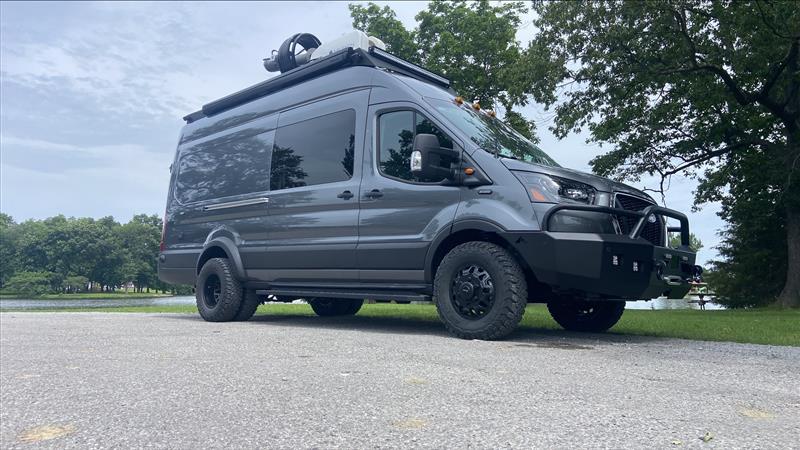
Preventing short circuits is important, and it starts with MCVs and towable mobile command trailers built with marine-grade components and heavy-duty weatherstripping. The roof must have sealed cable entry points that are leak-free and roof racks that stand up to strong winds.
By using marine-grade materials, the chassis and electrical interfaces resist long-term corrosion and damage from excessive humidity and water from rain and snow. Draxxon takes one additional precaution: all outdoor daylight-viewable monitors are housed in a fully sealed enclosure, making it easy to view drone footage and other live feeds, no matter what’s happening outside.
UAS and Aerial Operations
Unmanned Aircraft Systems (UAS), or drones, do so much in any mission. They provide real-time aerial imagery and heat maps to ground crews. However, they are at risk of being blown off course, and weather conditions make it hard for UAS pilots to do their job.
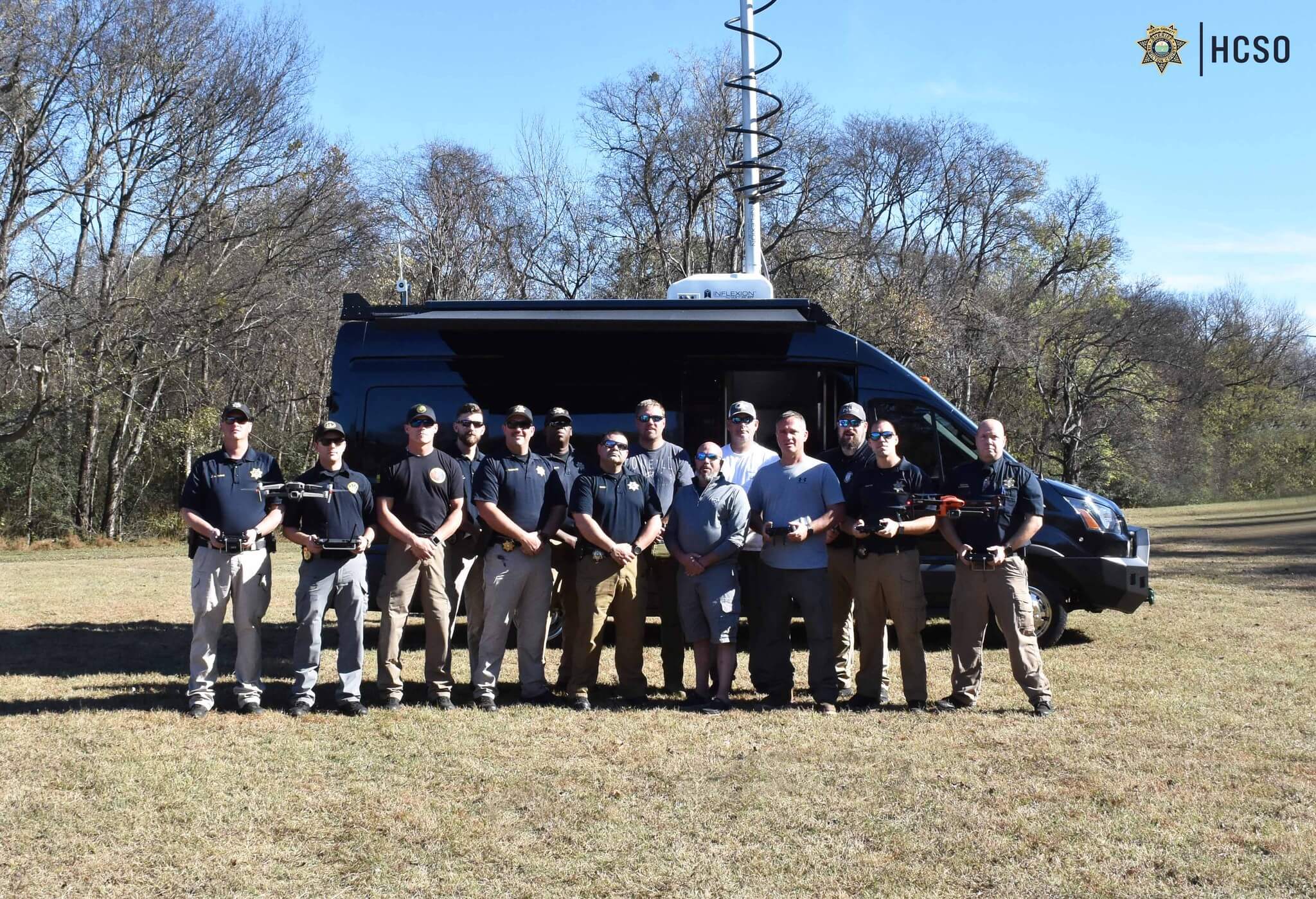
Vehicles like the Draxxon DX-1000 line are designed to integrate UAS operations into the existing MCC. They provide special features like:
- Integrated Flight Stations: Roof-mounted flight platforms or in-vehicle flight stations allow pilots to sit in a protected area while launching and flying the UAS.
- Onboard Charging: Heavy-duty charging stations are protected from humidity and rain.
- Protected Storage: Summer heat puts devices at risk of overheating, while icy cold weather drains battery life faster. Climate-controlled storage and charging areas eliminate these problems.
- Tethered Drone Operations: In high-wind conditions, you might want to keep the drone tethered to your water-resistant MCC. The DX-460 is customizable for enhanced aerial operations with tethered drones.
With a protective exterior that keeps your equipment and pilots dry, you can maintain drone operations even when the weather isn’t cooperating.
Weather-Resistant Generators
You could have the best technology within your MCV, but without power, it’s nothing. You also need generators that withstand dust storms, rain, and salt air. If you’re using a standard generator, dust and sand from a dust storm can trigger mechanical failure.
Draxxon partnered with Volta Power Systems to establish a towable MCC that is powered solely by an electric generator. The lithium-ion battery banks are completely sealed, protecting them from dust, heavy rain, ice, and snow. They can run a full day and night on a single charge. Add solar panels to keep the batteries charged.
Draxxon Is Your Partner in Weather-Resistant MCVs
When evaluating MCVs, flashy technology is only as good as the vehicle it’s contained in. Large displays are useless if water seeps into a vehicle’s roof or side panels. The physical integrity of the vehicle must be considered.
Let us know what you need. Our engineers meet your exact demands and deliver a design that exceeds your expectations. We can have your weather-resistant MCV ready faster than you could imagine.
When severe weather hits and the local infrastructure cannot be depended on, it won’t matter. Your custom MCV keeps the operators and technology safe while ensuring seamless communication from set-up through the mission’s end.