Four out of 10 people admit they’re excited about the growing interest in artificial intelligence, but concerns remain. AI is a relatively new technology and needs to prove it’s both safe and valuable. Despite any hesitation you may have, there are incredible benefits in disaster response.
AI plays a role in the advantages that mobile command centers offer. If you’re ready to embrace a revolutionary way to handle disaster response efficiently and safely, our quick guide to AI and high-tech mobile command centers helps you get started.
Moving From Reactive Recovery to Mobile Command Centers
An emergency response used to be a rigid, step-by-step process that involved responding to situations as they arose. It began with:
- The call or warning that help was needed.
- Analyzing data and developing a response.
- Arranging who needs to react and when.
- Transmitting information from the Emergency Operations Center (EOC) to responders.
The problem with these reactive plans is that the EOC could be miles away. Messages take time to reach the appropriate party, and information could be misinterpreted if the connection is full of static or signal loss.
The EOC would receive the messages, analyze the information, and make decisions about the on-the-ground response. They would send the resources, equipment, and personnel to the appropriate location. Allocation of funds also had to be considered.
This process took time for the EOC to process incoming messages and determine what should and shouldn’t be shared. Relayed information took time to reach the appropriate responder or team.
Today’s Mobile Command Centers (MCCs) change that. Instead of relying on relayed messages that take time to transfer and analyze the data, often through different departments, and continuing to monitor and manage actions, the command center travels with the teams. AI and real-time information from drones, built-in weather stations, and live-stream capabilities ensure that decisions are made instantly.
Those mobile vehicles, trailers, or ground control stations provide the technology and solutions your teams need during natural or man-made disasters. Vehicles can go off-road, opening the door to bringing the MCC to the scene, even if it’s miles off a main road. Customized solutions let you set up precisely what you need.
Making the Most of Data Using Artificial Intelligence
MCCs provide your responders with a lot of data. From real-time weather alerts and radar to broadcasting capabilities that support live streaming, your EOC team has the data they need when they need it.
AI can take the data returned from these features and guide your team toward immediate plans to share with the rest of the team through integrated communication systems. Imagine a typical response without today’s technology.
Suppose a tornado hits a trailer park. Search and rescue crews are on the ground, listening and looking for survivors. A team finds several people under rubble and needs paramedics. They alert you, and you must call paramedics, direct them to the exact location, and get their ETA. You then must tell the search team when the paramedics are due to arrive. There’s a lot of back-and-forth.
AI can analyze weather reports, wind speeds, and tornado paths to estimate where survivors might be. It can also warn of potential additional tornadoes to help protect responders. Drones cover more ground faster and in dangerous areas. Integrated communication systems can route all calls from various responders to a single channel. Because AI is fast, it processes data much faster than a human can.
You also have AI available to manage budgets, incoming and outgoing flights, schedule breaks for the different teams, and help allocate resources. Decisions are made in seconds rather than minutes or hours.
Staying Connected When You’re Off Grid
While it would be convenient for disasters to affect only areas with excellent infrastructure, that’s not always the case. Disasters often occur in remote areas far from cell towers, public roads, or resources like electrical outlets.
MCCs can go off-grid. An MCC van can be designed to go off-road. If you must go through a desert to reach a crashed plane, an MCC does just that.
They’re also equipped with generators and battery power systems that provide power for days. You don’t lose power or need to decide which resources to use and which to turn off until you can access the batteries or refuel.
Keeping Warm or Cold for Longer
If it’s sweltering outside, you shouldn’t have to give up AC that keeps computers from overheating. In a blizzard, heat is essential, and you shouldn’t have to choose between a warm workspace and turning off the exterior lighting system.
With battery backup systems and generators, you can keep the workspace in the MCC comfortable. Because you run the MCC on batteries and generators, you have extra time.
Learn More by Reading Case Studies
Boone County Fire Protection received a grant from the State Emergency Management Area. The goal was to acquire a mobile command vehicle for Missouri Task Force 1 to make it easier to deploy the team and its UAS drone during national disasters.
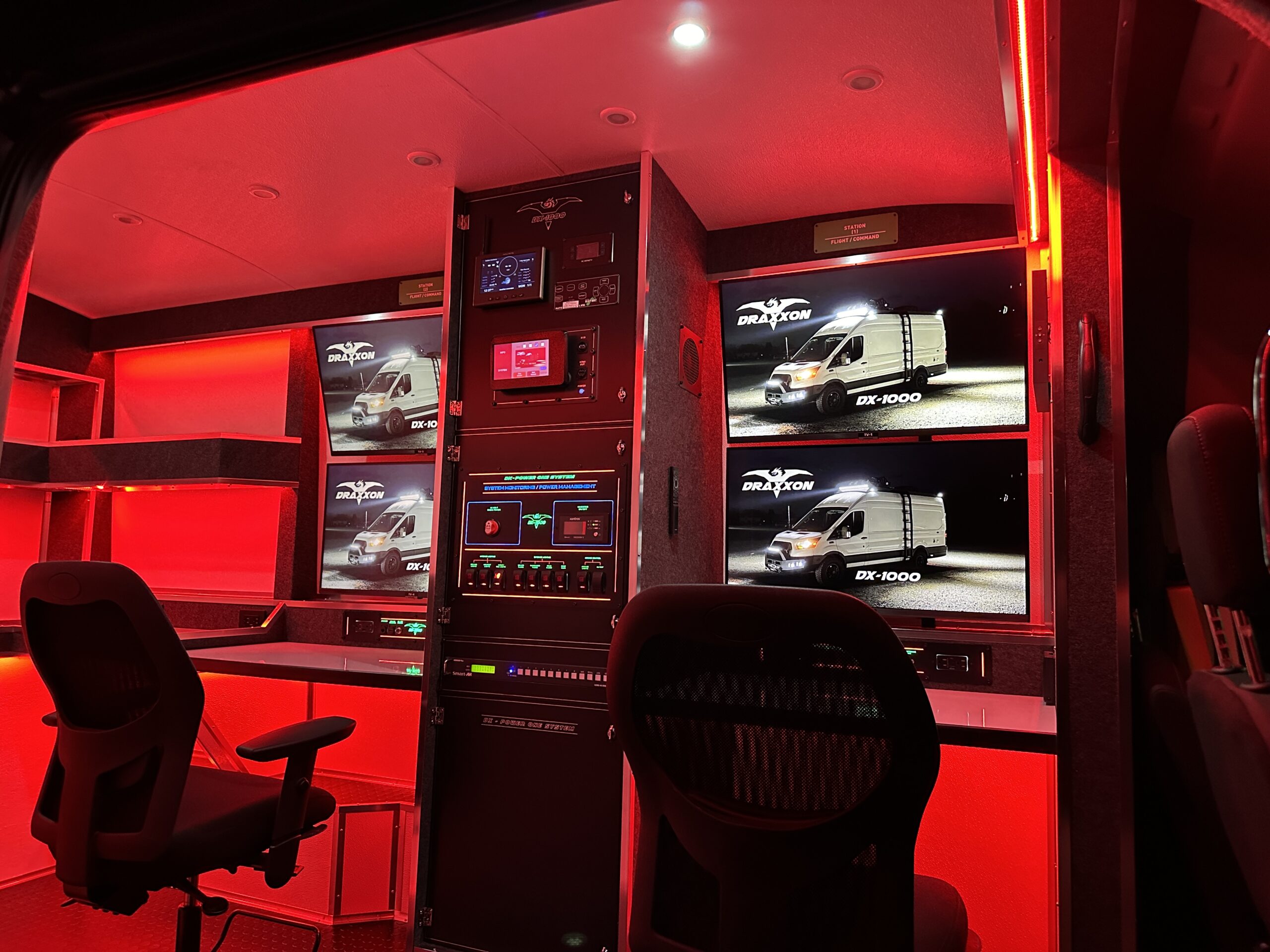
Draxxon customized a DX-1000 Mobile Command Vehicle (MCV) following Boone County Fire Protection’s requirements. The task force wanted an off-road vehicle with plenty of space for supplies and equipment. They also needed:
- GIS support: Training and technical help for the Geographic Information Systems (GIS) were necessary. GIS printers and plotters were also crucial to the organization.
- Radio equipment: Integrated communications with signal boosters were essential.
- Workstations: Room for the MCV staff to work efficiently and effectively was important.
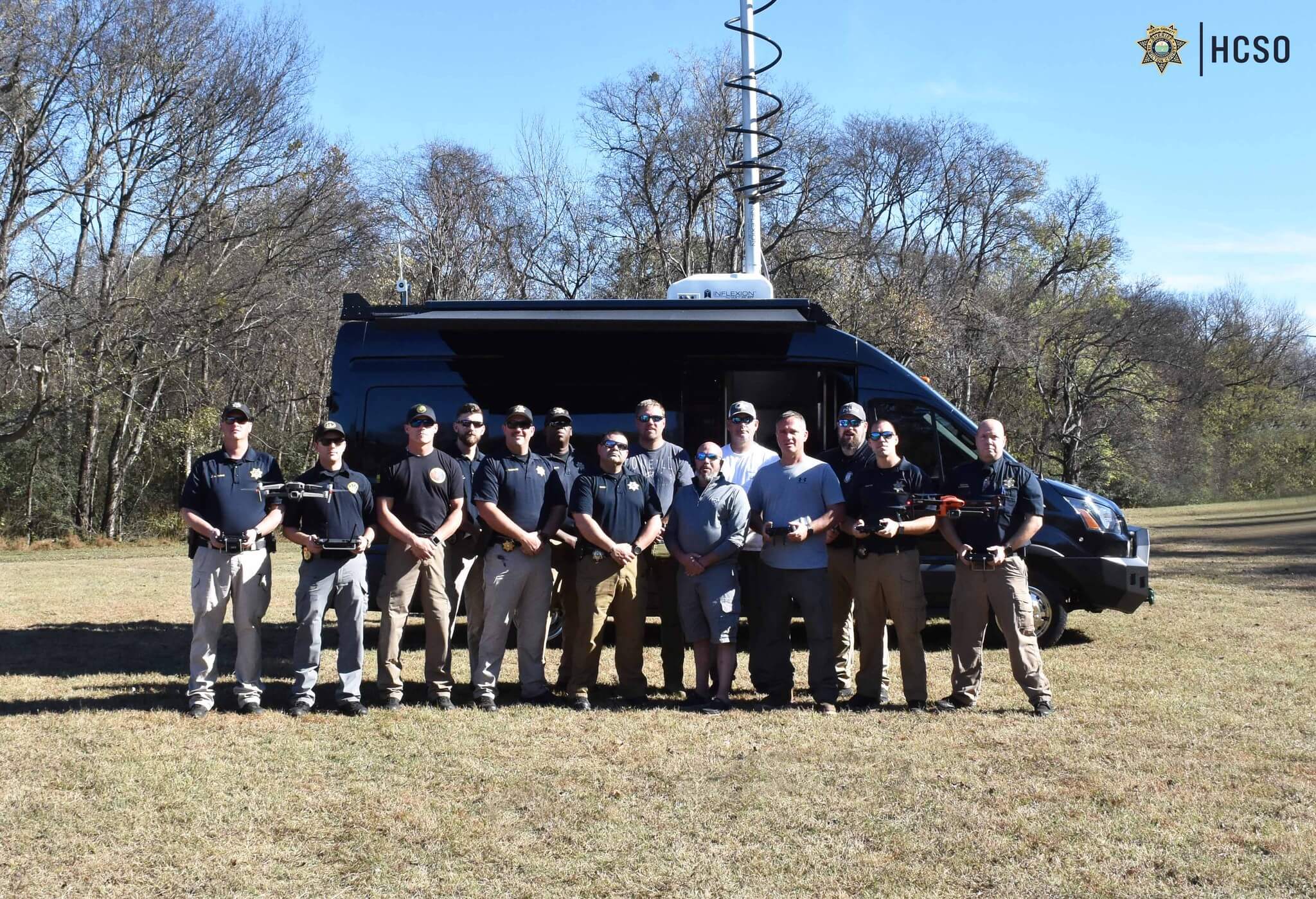
- Drone capabilities: The team can deploy and fly the drone from inside the MCV while watching its feed on monitors.
In addition to all that, Draxxon’s team knew that the ability to integrate emerging technology would allow the MCV’s equipment to evolve alongside technological advances. Embracing advancements is critical.
Investing In Your Valuable Team
It’s 2026. We’ve seen increases in storm power over the past few years. Wildfires, tornadoes, flooding rains, and so many other disasters require fast, insightful responses. In 2025 alone:
- More than 130 people died in the Guadalupe River floods in Texas.
- An outbreak of tornadoes in the Southern U.S. killed over 40 people in March.
- At least 30 people died in the Los Angeles, California, wildfires.
Empower your responders to do their jobs efficiently and safely by ensuring they have a technologically advanced MCC. With AI and real-time data, you help your team save lives without putting their own at risk. Let Draxxon know what you need, and we’ll work with you to make sure it’s the best.