In 2024, Malibu SAR successfully rescued an older man with dementia thanks to modern UAS drones equipped with infrared heat-seeking technology. It’s one of many rescues where UAS has led to happy outcomes.
The use of drones in Search and Rescue (SAR) operations has shifted from experimental to essential. If you’re not using unmanned aircraft systems like drones and pairing them with UAS command vehicles, you’re overlooking a critical step in public safety.
Drones have grown exponentially from simple eyes in the sky to efficient, high-resolution thermal cameras that provide abundant real-time information. Just as quickly as it allows for this information, you need a mobile hub that can break down the data and provide essential details to ground-based teams. Transmission delays have no place in a time-sensitive rescue.
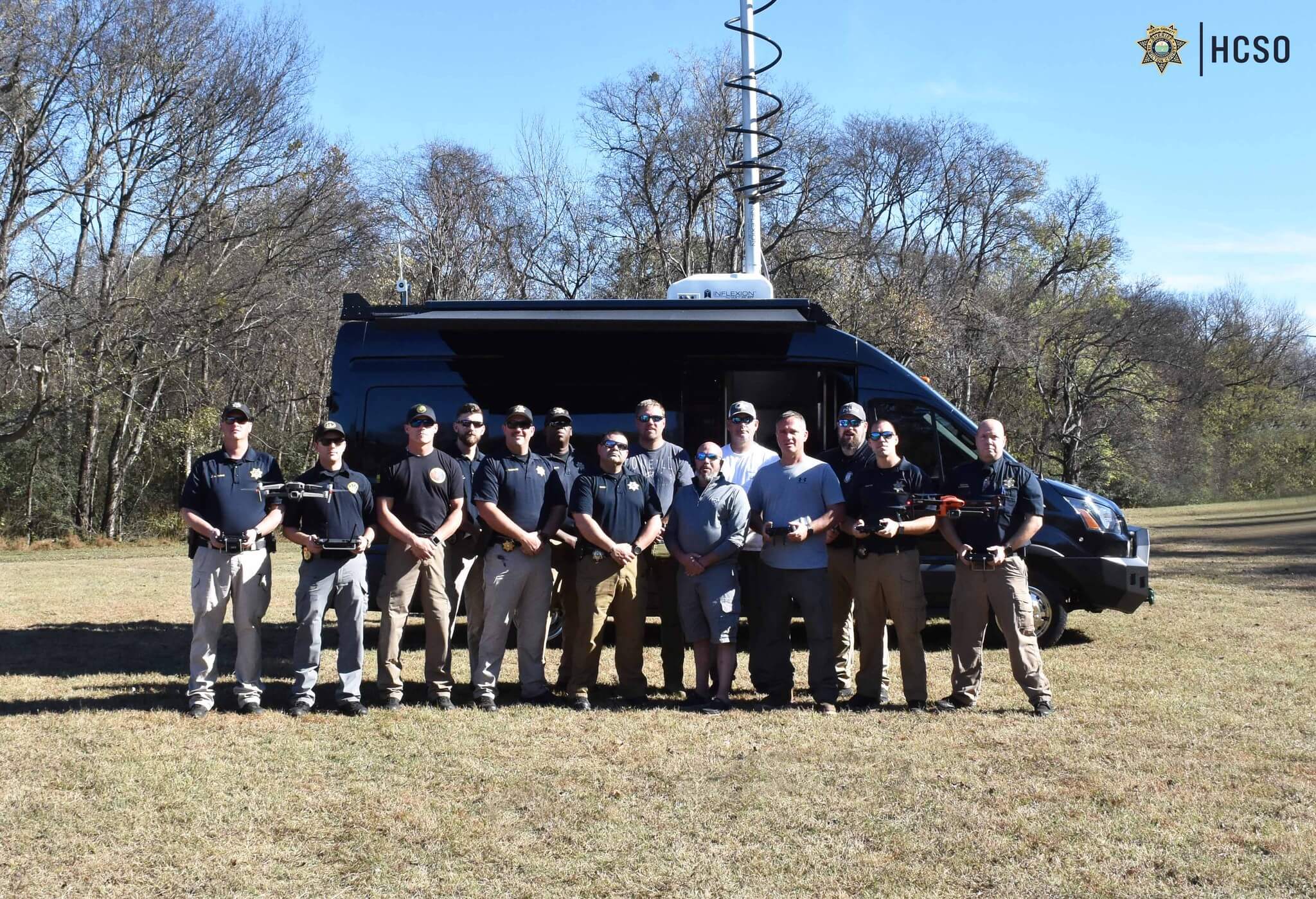
UAS command vehicles are the bridge you need between aerial technology and search-and-rescue teams. Mobile command vehicles pair cutting-edge technology with essential features like off-road capabilities and on-board generators and battery power sources. Learn why your SAR operations need UAS support.
The Beginning of Drone Usage in Search and Rescue Operations
Unmanned aerial technology has an extensive history. During WWII, British radio-controlled aircraft didn’t resemble the modern drone at all. However, this remote plane, known as the Queen Bee, provided airmen with the opportunity to practice realistic anti-aircraft gunnery.
The U.S. wasn’t far behind. A remote-controlled aircraft used for anti-aircraft gunnery came out a year later. As the use of unmanned aerial technology advanced, it was in the 1970s when an Israeli aerospace engineer developed an unmanned aerial vehicle that would become the Predator drone.
Still, drones were not allowed in U.S. civilian airspace until 2006. This launched widespread drone usage. It’s why so many people have and can use drones today.
Search-and-rescue drones are used in emergencies to locate missing people or find survivors after natural disasters. They’re equipped with features such as thermal imaging sensors that detect body heat, high-resolution cameras, and equipment to deliver supplies to people. If a skier goes off-trail and gets lost, drones can deliver water and snack bars while SAR teams work their way to the skier’s location.
Let’s backtrack a bit to past SAR missions. Before a UAS command vehicle, a drone’s pilot stood in an opening, flew the drone using a tablet or phone to view the drone’s camera footage. If there were a weather event or the location was extremely remote, the signal might fail. Vital data didn’t reach the crew due to signal loss. If the weather took a turn, the pilot had to stop, seek shelter, and wait it out. Flying the drone became impossible until the weather cleared.
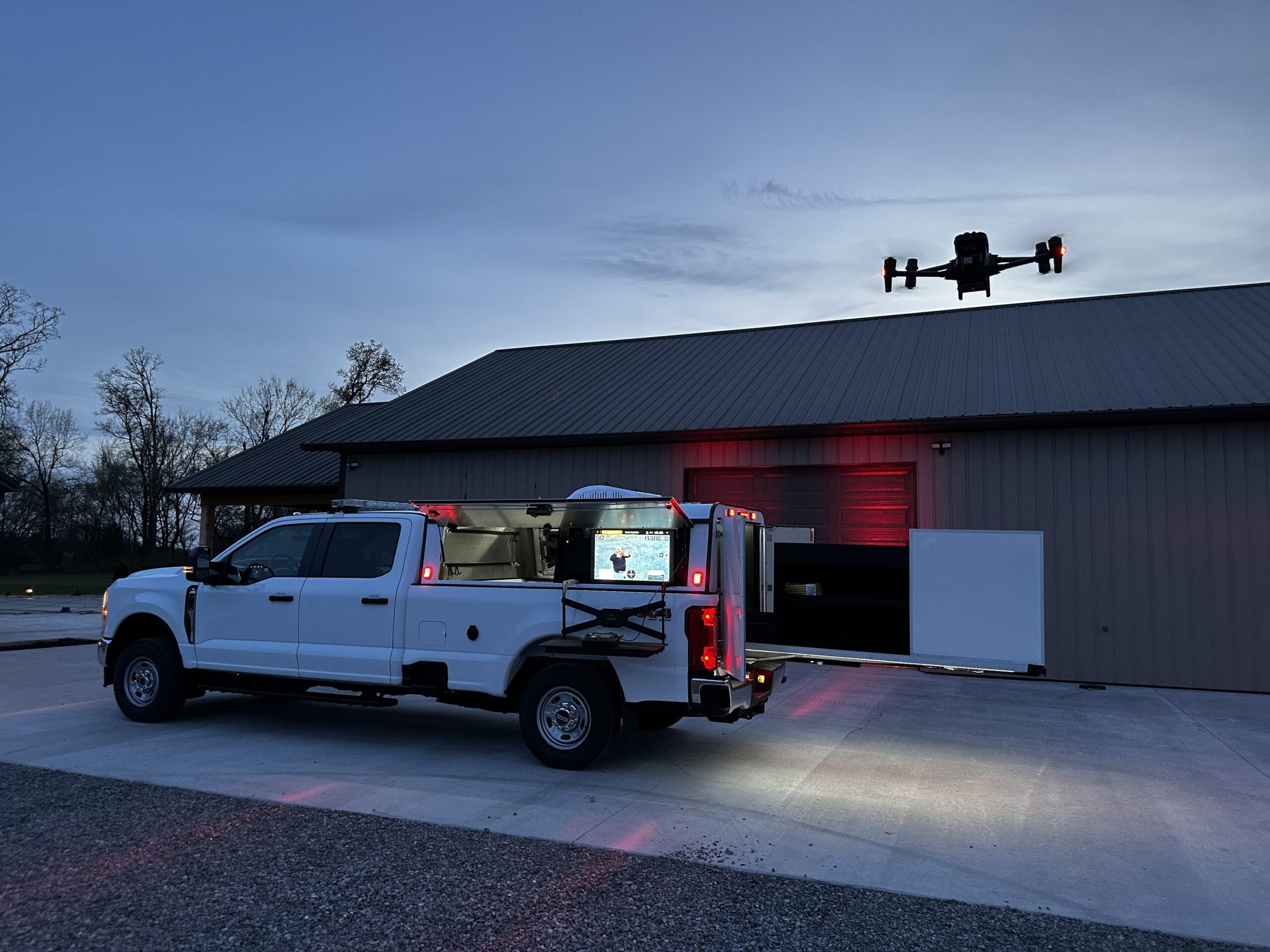
With a mobile command unit, the drone is supported by a suite of network assets that allow drones to be controlled and monitored from the protection of an off-road van or trailer located miles away. Even though the incident commander is miles from the SAR team, communications are instant.
Connectivity, Sustainability, and Visualization: Key Benefits of UAS Command Vehicles
The use of UAS command vehicles provides three essential benefits.
1. Connectivity
Not every SAR mission takes place in populated areas with seamless connectivity. Many of these missions bring teams into crowded, dark forests, foggy swamps and lake regions, or deep, narrow canyons. They occur during natural disasters that topple cell towers through fires, winds, lightning, ice, earthquakes, or landslides.
Reliable connections are essential, and that’s where UAS command vehicles make a difference. High-bandwidth, low-latency connections via LEO satellites enable high-quality and thermal images and videos to stream without lag or signal drops.
As images come in and the incident commander analyzes the data, broadcasting is also flawless. Teams get immediate information so that they know where to take a closer look, when the weather is shifting, and when the mission is complete.
2. Sustainability
During a mission, a drone can use up its battery faster than desired. Command vehicles can be equipped with battery banks, and inverters can convert solar energy into usable energy for recharging batteries and powering the monitors and other systems.
Mobile command vehicles have multiple charging stations, so you’re able to charge several batteries at once. With extra batteries ready when you need them, your mission doesn’t stop while drone batteries recharge.
3. Visualization
Draxxon’s UAS command vehicles are customizable to meet your needs. You decide what you need on board, but here’s a quick look at what you could include in your setup.
Inside the vehicle, you can have six large monitors displaying multiple data streams simultaneously. You can have one monitor showing the live feed while another shows thermal imagery. Others can display weather radars and maps that update as teams complete a search grid. Nothing is overlooked.
Real Stories: Draxxon’s Mobile Command Vehicles in Action
We believe that the actual test of our UAS command vehicles is out in the field. How have our mobile command vehicles helped in SAR operations?
Boone County Fire Protection District’s Missouri Task Force 1 used a grant to invest in a customized mobile command unit. After severe flooding in Kerr County, Texas, MO-TF1 deployed to Texas to support SAR efforts. They spent 16 days using their system and training to run primary and secondary search missions along the Guadalupe River.
With their UAS command vehicle and 85-member team, they searched the water, debris, and damaged buildings while also tracking sudden weather changes. By the end of 16 days, they’d tracked 450 miles on land and water. Because connectivity was not an issue, they could update their team with their own data and information from other organizations, such as FEMA and Kerr County emergency services.
The Future in SAR Missions
Advancements in UAS technology and systems continue, and Draxxon’s UAS vehicles adapt to these changes. One area we’re excited about is the use of advanced AI for autonomous control of drone swarms.
Instead of having one drone out searching for victims, imagine how much faster rescues would happen if you had one operator guiding dozens of drones in different sectors, each looking for something different. It’s technology that the Office of Naval Research and others are working on.
Even if we’re not quite there yet, having high-quality, thermal imaging drones finding people faster than before, SAR missions are completed faster, saving more lives in the process. It’s amazing to see high success rates occurring due to technological advancements.
Contact Draxxon’s experts today for a free consultation. Our UAS command vehicles are customizable to ensure your custom build is exactly what you need. If you run a lot of mountain snow squall search-and-rescue operations, you need different features than someone performing post-hurricane SARs. Our specialty vehicles meet your needs. We ensure it.