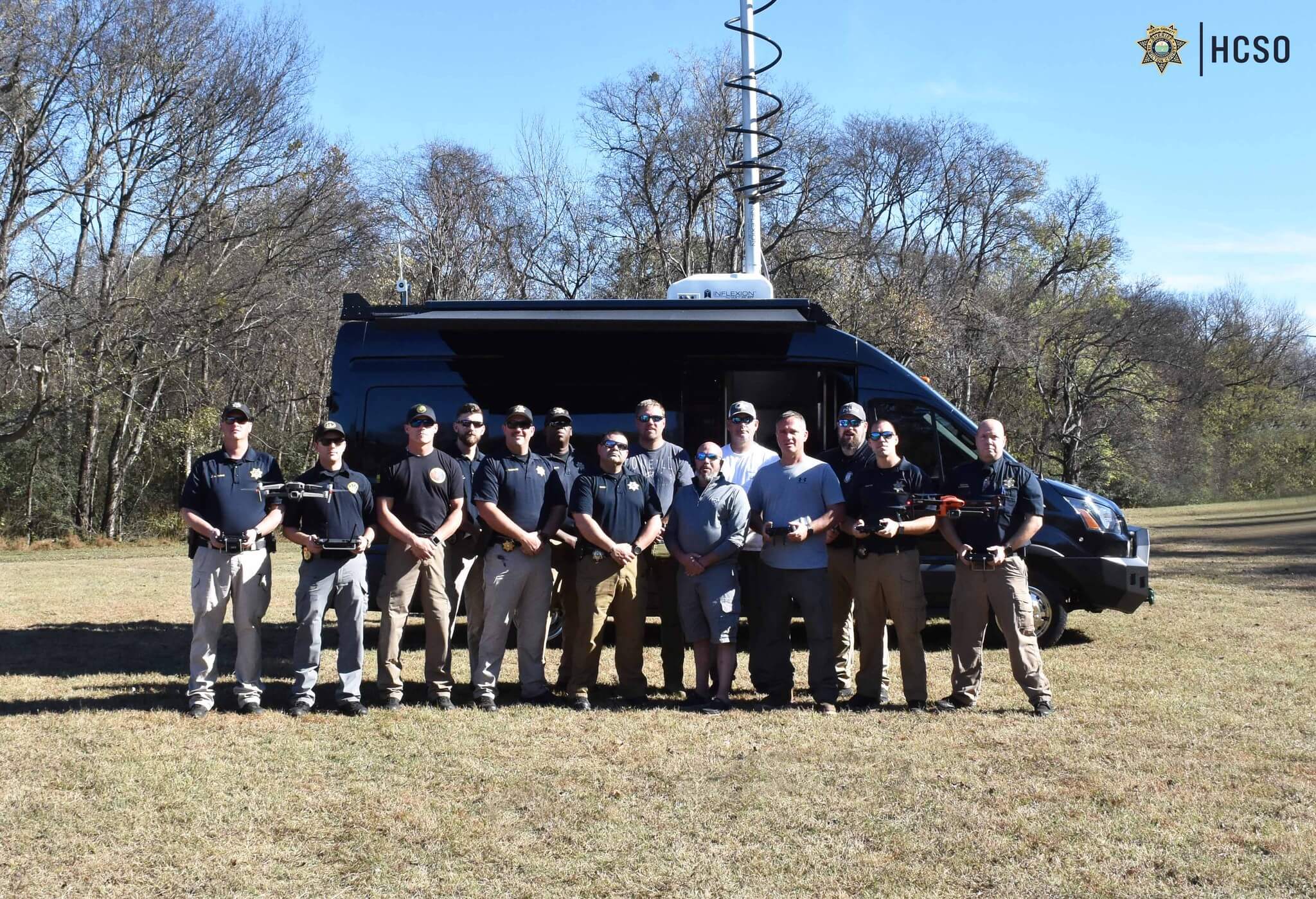
Studies show that investing $1 in disaster preparedness saves a community about $13. One of the most effective ways to prepare for natural disasters, wars, mass shootings, and weather events is to have a mobile command vehicle ready for emergency response.
Mobile command vehicles act as a central hub for coordination. An MCV provides essential features, including radio systems and satellite communications. From a single location, units such as police, fire, and public safety can communicate efficiently and securely, ensuring the focus stays on saving lives and helping people during their most critical moments.
Every Second Counts When Coordinating Emergency Responses
Emergency responses rely heavily on one key factor – speed. Whether you’re managing incidents during a rapidly approaching hurricane, dealing with the aftermath of a cold Nor’easter, or responding to a tragic mass shooting, you only have seconds to make decisions and give commands.
In high-pressure situations, taking quick action is essential. However, making sure this occurs can be difficult for various reasons.
Delays in Communications
Each event varies, but imagine you’re handling a wildfire. Police are managing detours and road closures, firefighters are on the front lines working to stop the fire from spreading and make sure it’s extinguished across the scorched area, and paramedics are aiding those with burns or smoke inhalation.
These professionals use different radio channels. Public safety radio systems operate on 700/800 MHz bands. Beyond that, there are various other frequencies. Very High Frequency (VHF) is ideal for remote areas, while Ultra High Frequency (UHF) works best in urban settings.
When police, fire, and EMTs transmit information on separate channels, delays occur as incident commanders identify locations and transmit messages. With an MCV and a central command hub, communication between teams becomes seamless as commanders and officers sit together in the MCV to exchange intelligence.
As a fire changes direction, firefighters quickly notify police so another road can be closed. Evacuations begin without delay. EMTs know where to send paramedics next.
Disorganized Data
When data isn’t properly analyzed and organized, it leads to delayed or lost information. Having timely access to data is essential. Imagine trying to manage an event without live GPS feeds showing each person’s exact location from start to finish.
Real-time analytics give team members immediate access to essential information. There is no delay in locating a specific team member or first responder, viewing satellite images of an individual’s exact location, or tracking the movement of a fire or fast-moving storm.
Poor Infrastructure
Rural areas might lack the infrastructure needed for wireless service. When it’s hard to reach cellular towers, it becomes difficult for anyone, like volunteers with cellphones, to connect to the services they need. Radio waves work better for this, but what happens if towers are knocked down in a significant storm?
MCVs offer satellite dishes that ensure reliability in even the harshest conditions. In a remote area, this valuable infrastructure provides high-bandwidth communication.
A lack of well-coordinated emergency response raises the risk of harm to those in and around your community. When a quick response is necessary, any delay can jeopardize lives, cause serious injuries or illnesses, or damage buildings and landscaping. Additionally, it wastes resources, leading to unnecessary spending.
Establish a Fail-Proof Central Hub With Mobile Command Vehicles
Mobile command vehicles serve as a central hub to prevent issues such as data gaps, delayed information, and poor tracking of team movements. They also offer advantages that improve their resilience and help teams manage emergencies.
Accessibility With Multiple Cellular Carriers
MCVs include routers that can gather signals from different cell towers. If one tower fails, the system automatically switches to the next strongest network. This ensures that data transfers maintain the fastest transfer speeds.
Climate Control
Computers, radios, and other sensitive electronic equipment are at risk of overheating because they generate a lot of heat. Thermal paste helps a lot, but a cold environment is also important. A climate-controlled MCV protects delicate IT equipment with an HVAC system that prevents overheating.
It also helps keep equipment warm in cold climates. During an emergency response in a blizzard with sub-zero temperatures, the HVAC system ensures that equipment and officers stay warm.
Independent Power Sources
Many MCVs have two power sources. One is a gasoline or diesel generator, but they also have battery banks that provide back-up power if one runs low. This keeps power maximized throughout the mission.
It’s also possible to draw power from external sources. If a working power source is nearby, the MCV connects to it to supply local power. This is helpful when power is restored after an outage, such as following a hurricane.
Prioritized Critical Loads
In a prolonged emergency, an MCV can prioritize loads and manage power consumption. It shifts resources as needed to avoid a fast drain on resources.
Load prioritization might determine that accessing communications and servers is more important at that moment than heat. As the situation changes, such as restoring power, it can switch the priority again.
Radio Interoperability Systems (RIOS)
A RIOS system is a bridge that allows different radio frequencies to communicate without delay. It ensures that EMTs, firefighters, and police know exactly what the other is doing.
Secure Communications Systems
Keeping the public from accessing private communications during an event is critical for many missions, rescues, or security situations. MCVs use multi-layer firewalls and VPNs to protect classified communications between command control and team members.
Vibration-Resistance
When you’re driving on rugged terrain, vehicles bounce around a lot. Radio equipment and other vital IT components are subjected to that vibration and jolting movements. In an MCV, enclosures and racks are designed to resist vibrations and protect all IT equipment.
Valuable Lessons on Coordination and Response
In many situations, fast response times make the greatest difference. Here are a couple of examples.
Coordinated Policing in San Francisco
In a large city like San Francisco, coordinated police efforts and real-time data analysis are essential for combating crime. San Francisco deployed mobile police units (hotspot policing) to send more officers to high-crime areas. This strategy is effective, as violent crime dropped by 22% in 2025. Homicides decreased by 45%, and robberies are down 40%.
Joint Command Operations in Green Bay, Wisconsin
Green Bay, Wisconsin’s, fire and police departments realized they could save taxpayers money by combining two mobile command posts. They purchased a single incident command vehicle and trained together. Now, the departments collaborate to manage emergencies and safety issues during crowded events, NFL games, and natural disasters.
Choose DRAXXON MCVs
Entry-Level and Custom Solutions
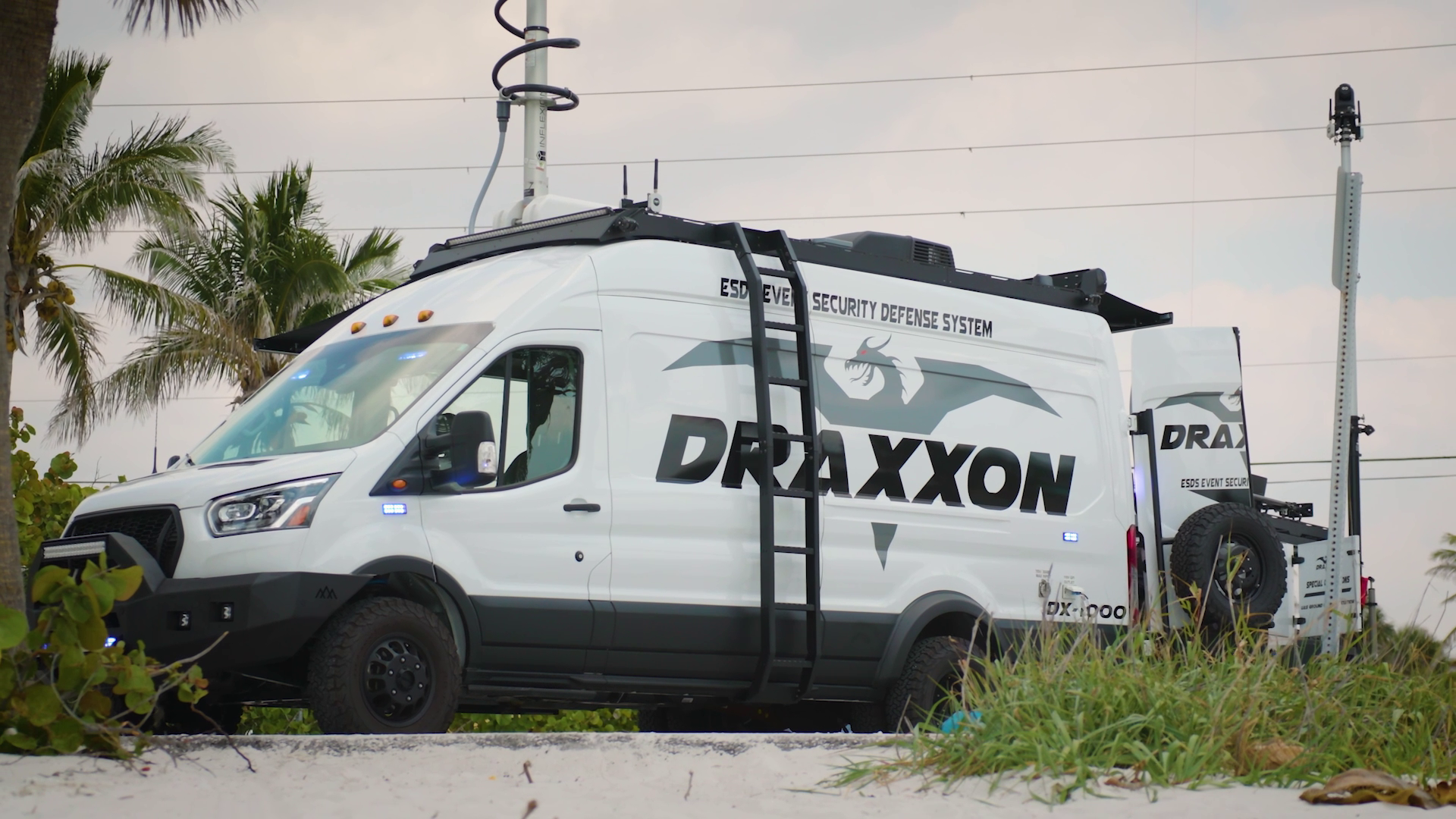
The entry-level DX-1000 series provides the basics needed for mobile operations. It’s our most cost-effective model and a good starting point.
The DX-1000 Mobile Command Vehicle line provides the options you need for whatever terrain you face. Choose a Ford Transit or Mercedes Sprinter with off-road capability. Decide if you want to lease (short-term and long-term options) or purchase your MCV. Do you need integrated UAS flight operations?
Advanced Features Included
Among the features DRAXXON’s MCVs include are:
Access control systems
AI-driven monitoring systems
Alarm systems with real-time alerts
Real-time data analysis
State-of-the-art surveillance equipment
User-friendly communication systems
Tailored Mobile Command Solutions
DRAXXON’s mobile command vehicles are not one-size-fits-all solutions. We collaborate with our customers to deliver tailored mobile technology and security services.
Whether you need an MCV for disaster response, event security, military defense, mobile classrooms, private security, public safety, UAS operations, or utility inspections, we help you get precisely what you need. Our solutions include 24/7 support and quality that surpasses expectations. Fill out our online form to connect with our MCV experts.